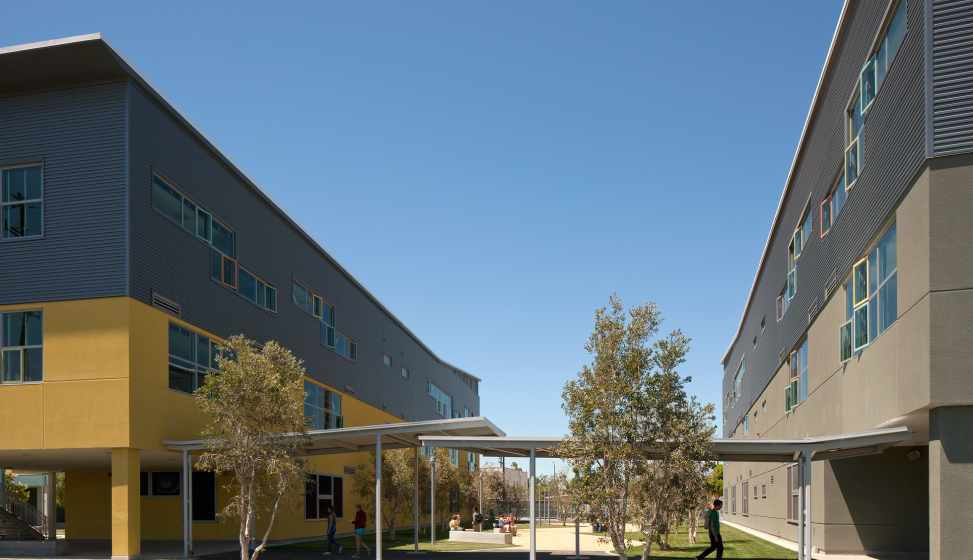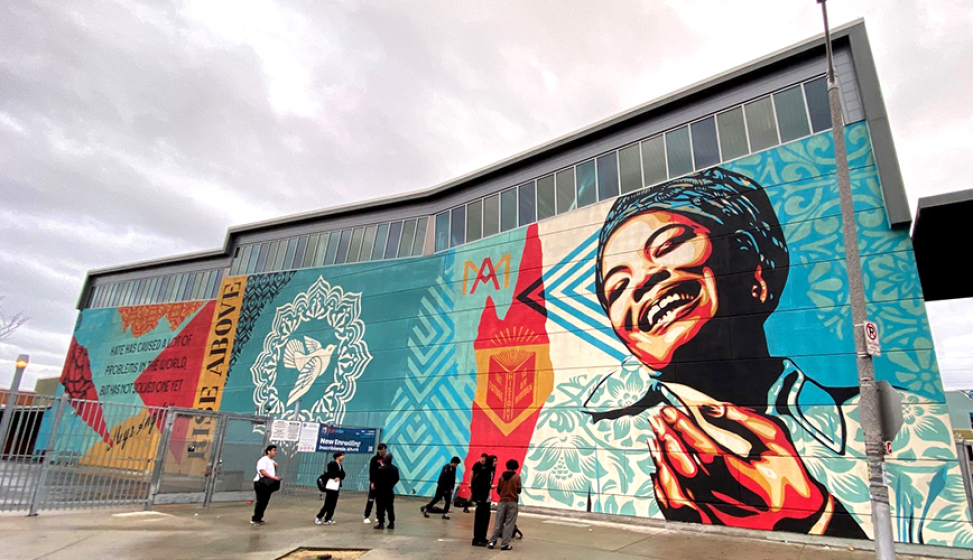
Dr. Maya Angelou Community High School, Los Angeles Unified School District

Dr. Maya Angelou Community High School (Central Region High School #16)

Los Angeles Unified School District

Los Angeles, California

Awards

Close
  • 2011 Merit Award, Excellence in Design
    • AIA Long Beach/South Beach Chapter
  • 2002 American Architecture
    • Chicago Athenaeum Museum of Architecture & Design
Awards
GALLERY

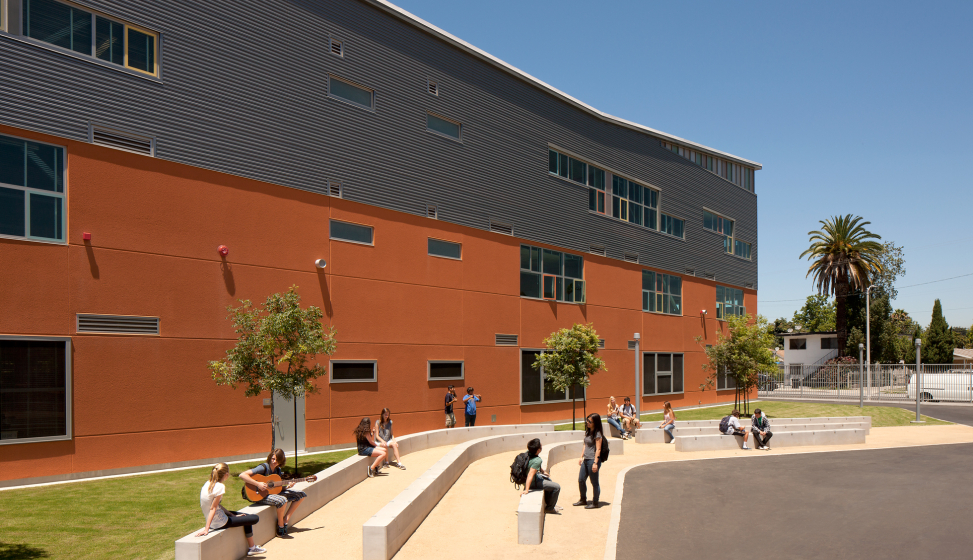
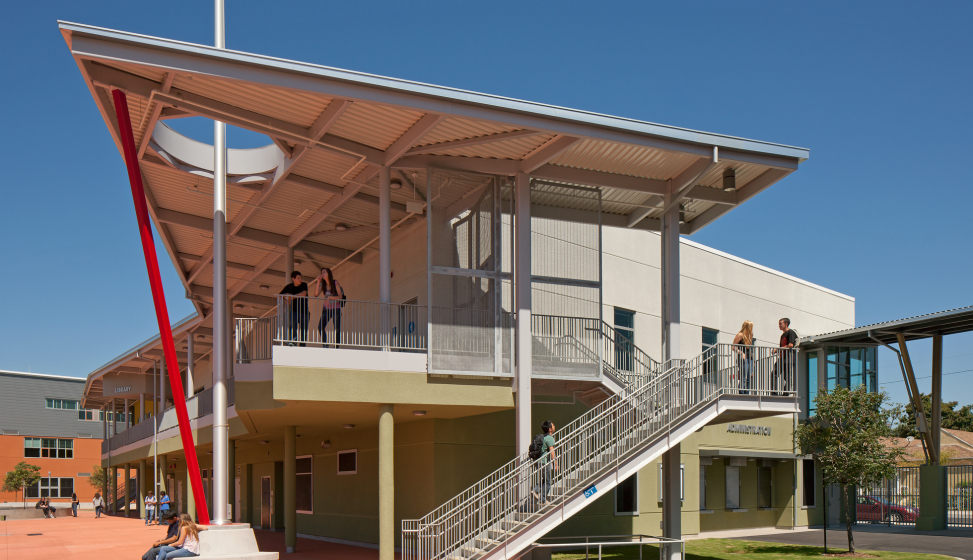
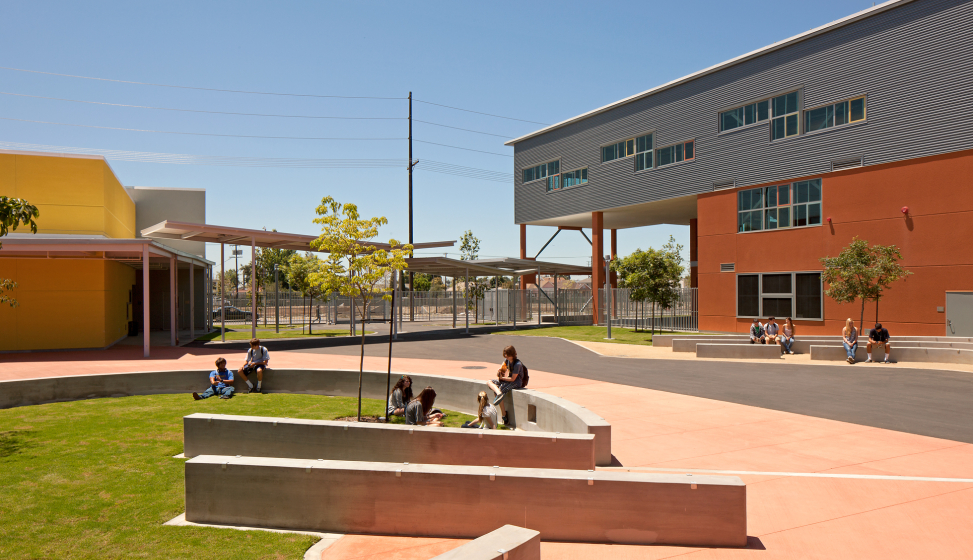
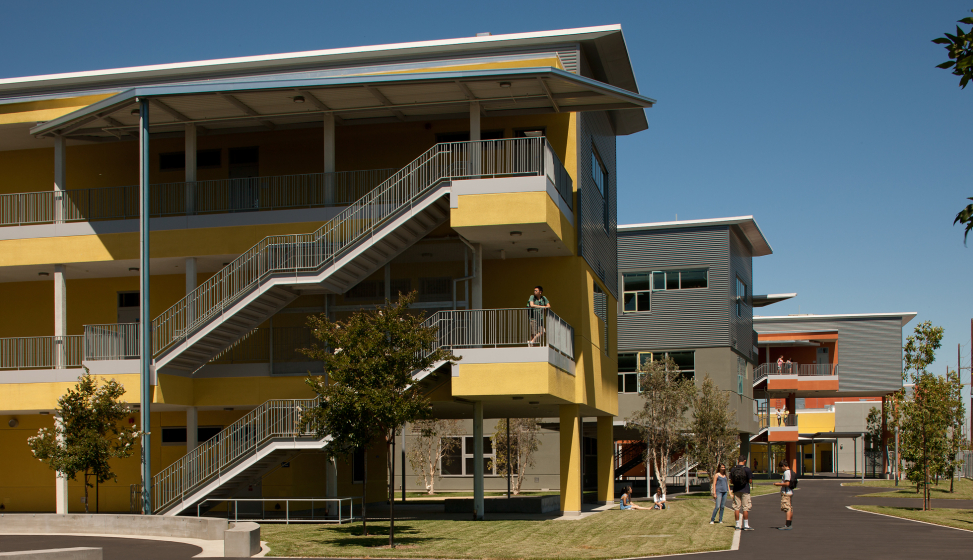
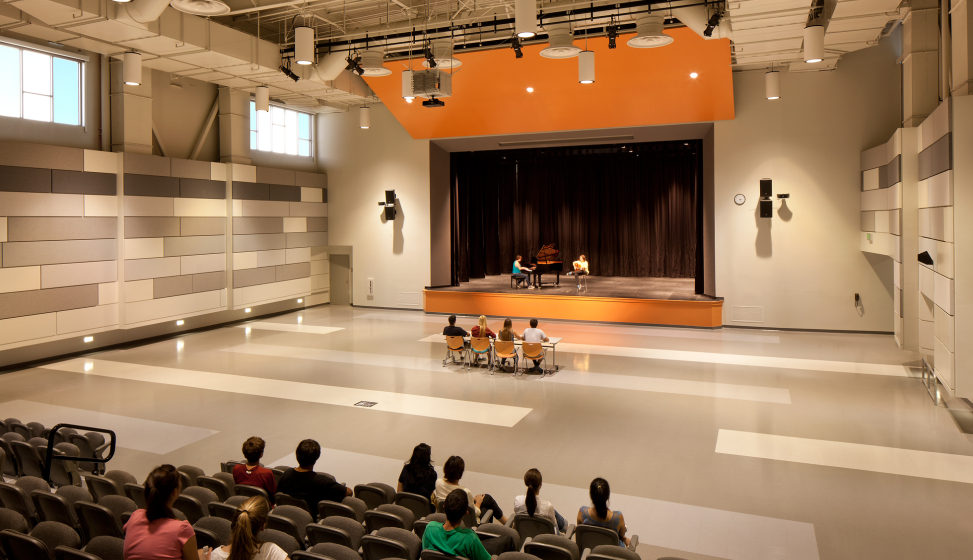
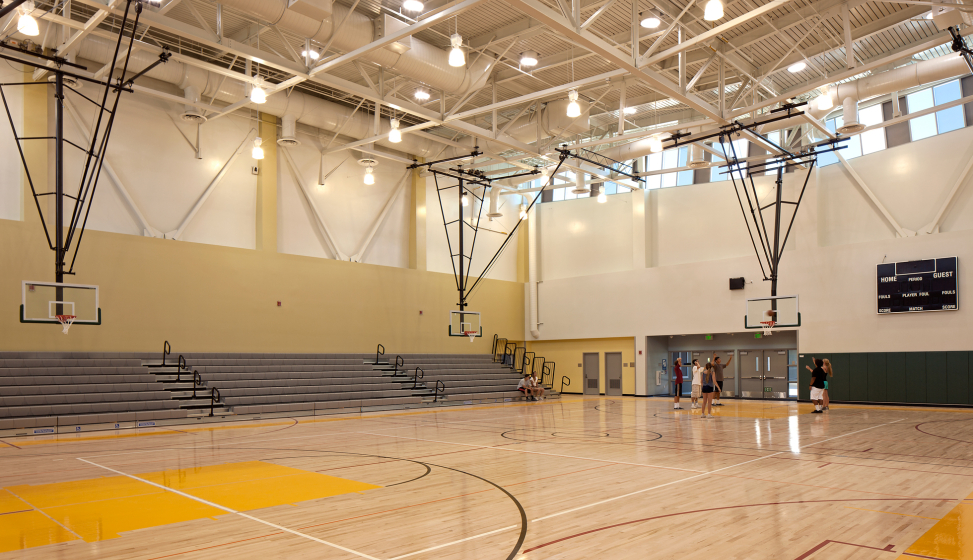
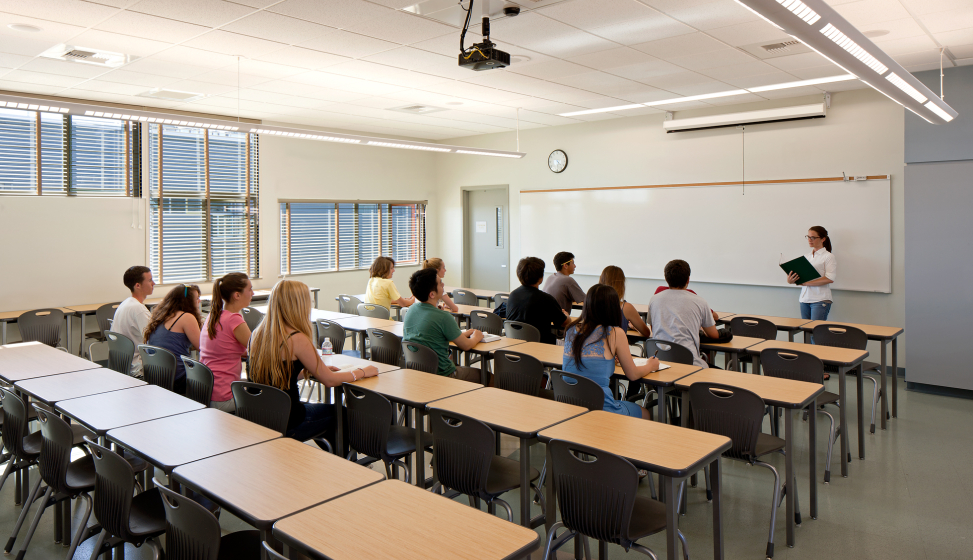
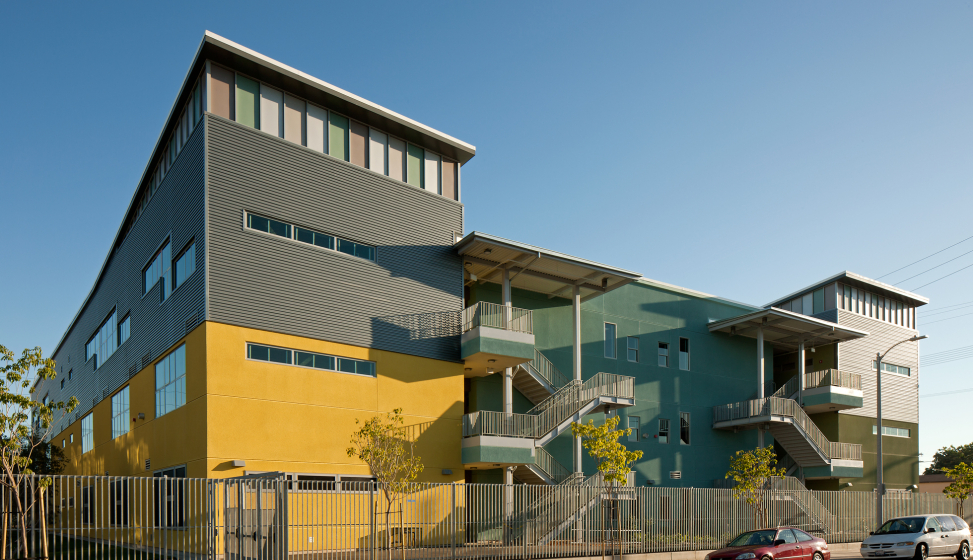
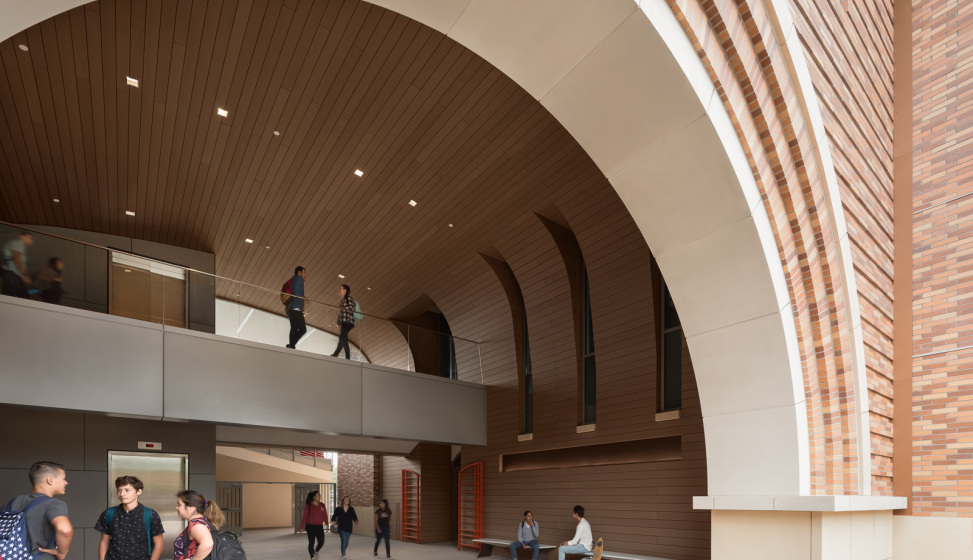
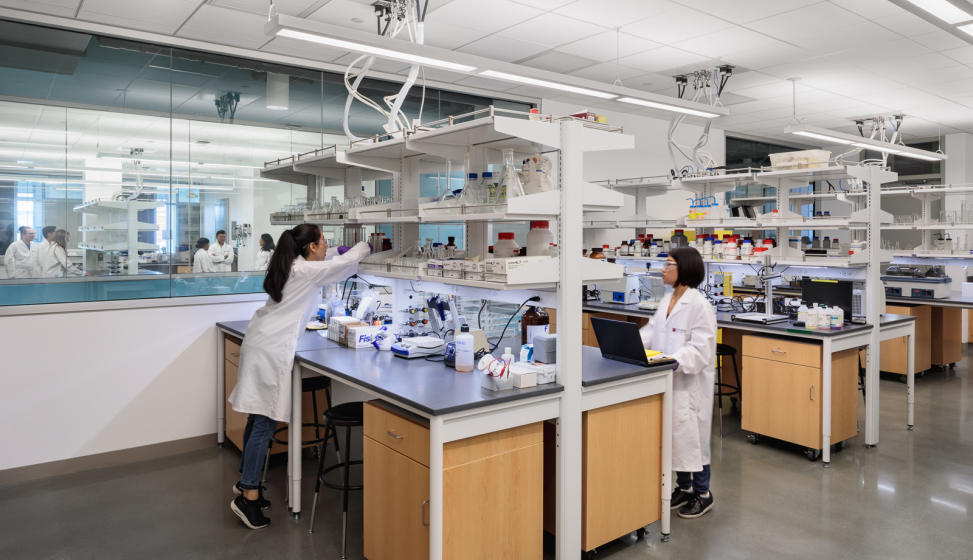
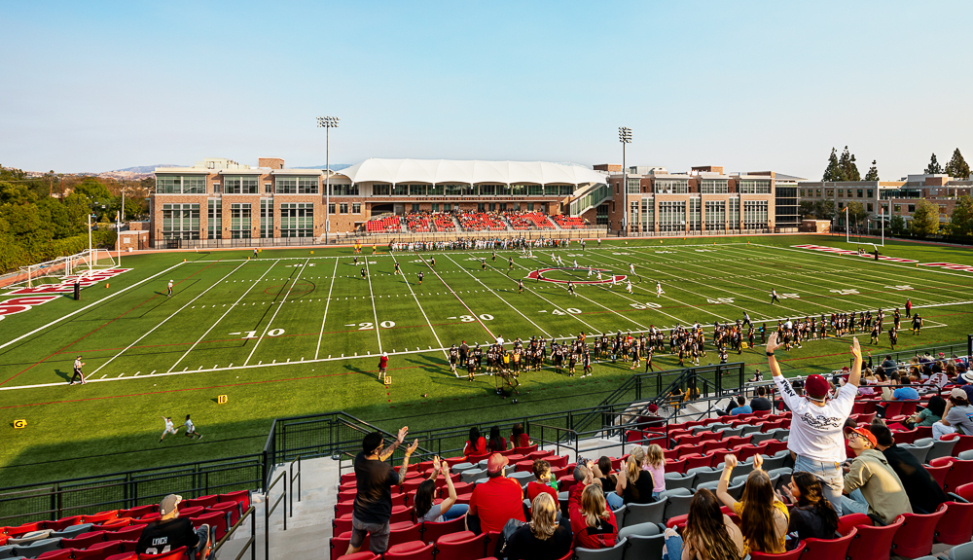
This new, 211,000 GSF, six-building high school complex includes: performing arts classrooms, a library, multi-purpose room, two gymnasiums, a variety of playfields and courts, food service and lunch shelter, administrative support services, playfields, and subterranean parking under basketball courts. It was important to maintain as much usable open space as possible to create a campus atmosphere on the constrained urban site. Given the magnitude of the intervention it was important to be mindful of the scale and character of the surrounding neighborhood throughout the process.
 

West Edge

West Edge

Los Angeles, California

Awards

Close
GALLERY

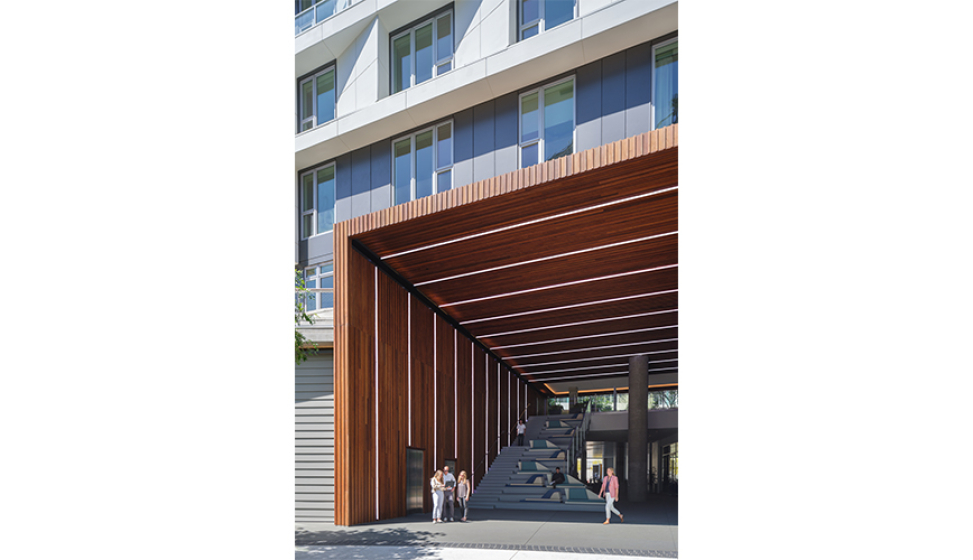
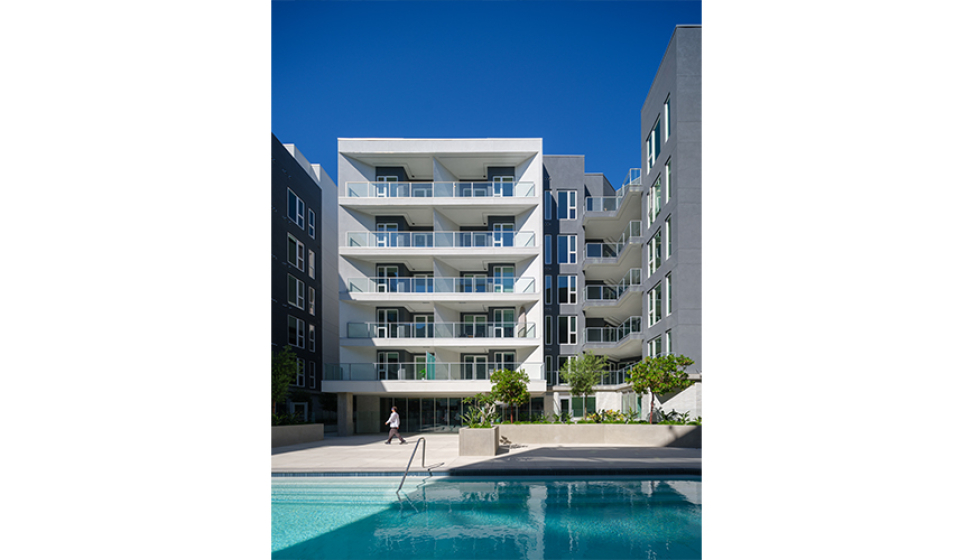
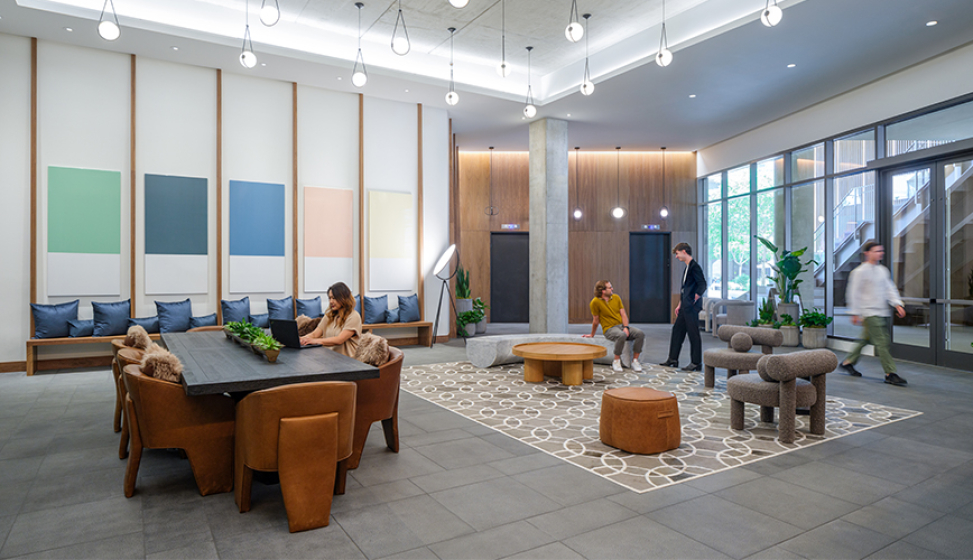
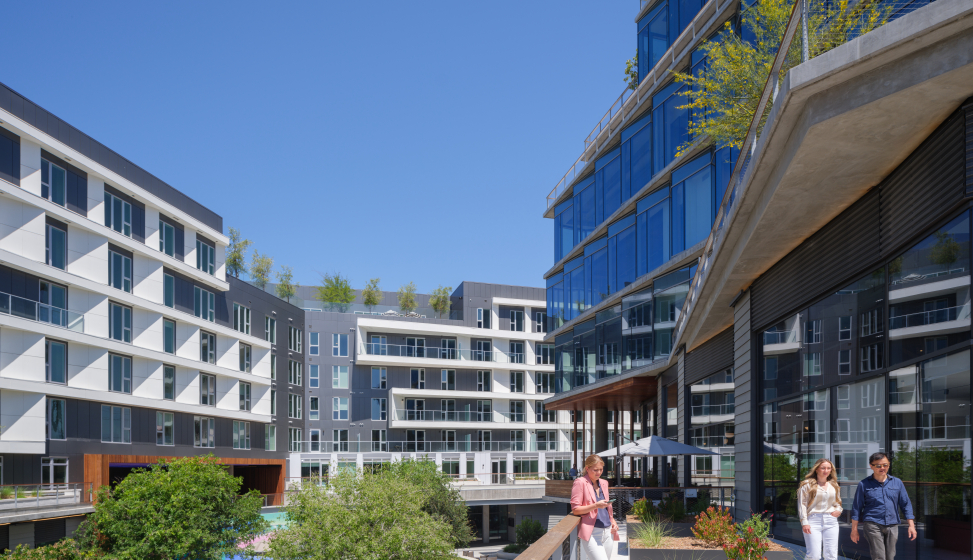
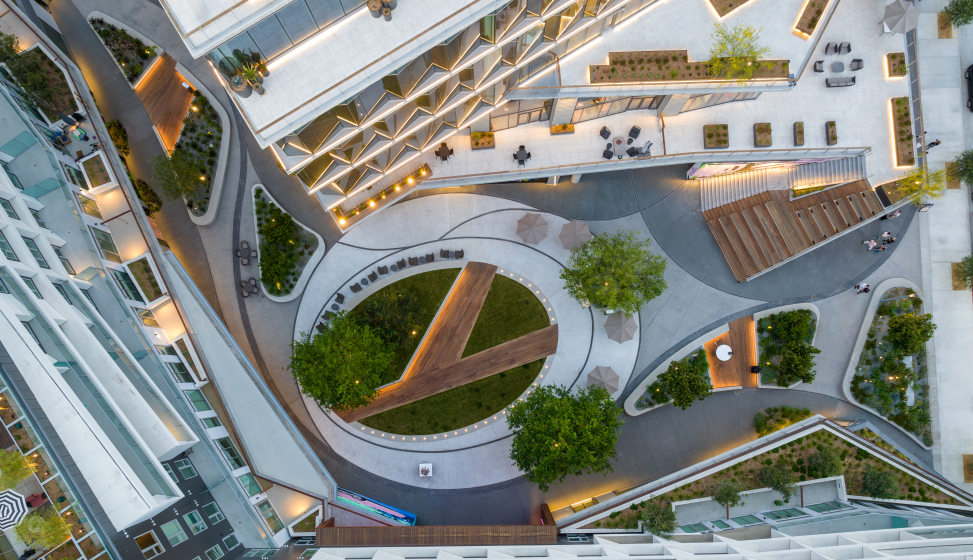
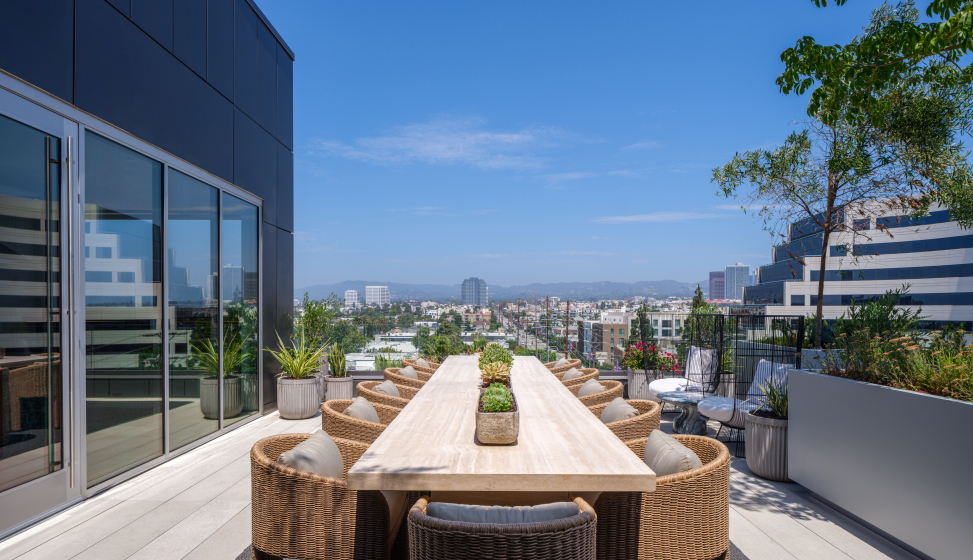
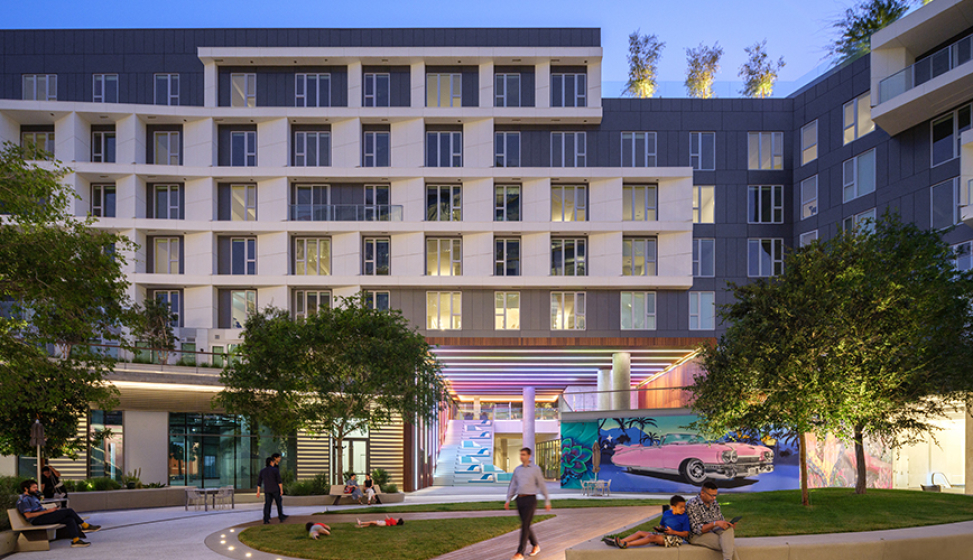
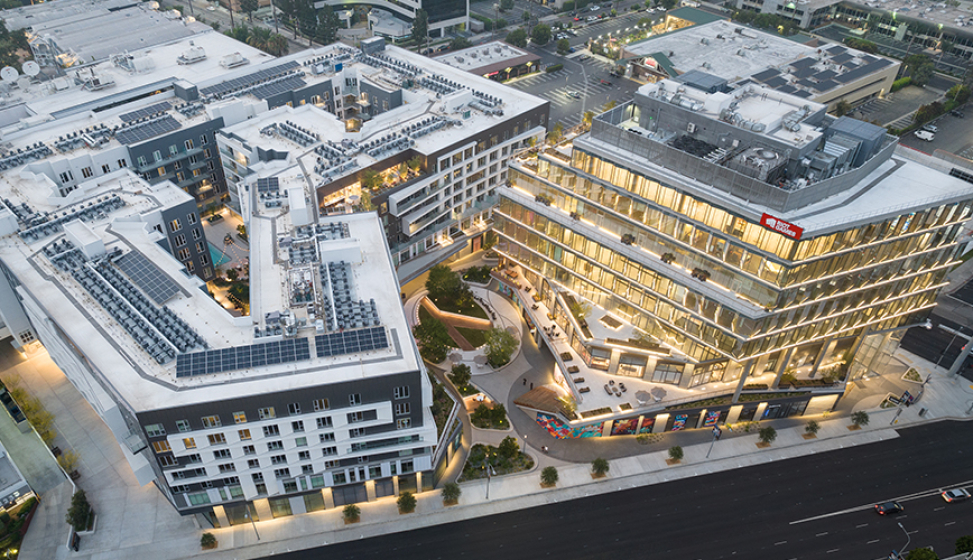
West Edge stands as a testament to modern urban living. The high-density, mixed-use development opens to the surrounding community through an expansive public outdoor plaza and retail promenade. Innovative residential buildings overlook these public spaces with 600 units of creative loft style and flex unit plans. The residential program includes 90 below-market-rate workforce housing units and 31 low-income units to serve the community. The mixed-use project also includes an 8-story, 200, 000 square foot office building, retail, food & beverage, and a grocer. The transit-oriented development, located less than one block from the Expo/Bundy Metro station connects residents, employees, and visitors to and from downtown Santa Monica to Downtown Los Angeles. The design team focused heavily on connecting the past to the present - the history of the site that includes the famous Martin Cadillac dealership (established in 1975), paying tribute to the prominence of the site that has always been part of Los Angeles’ history.
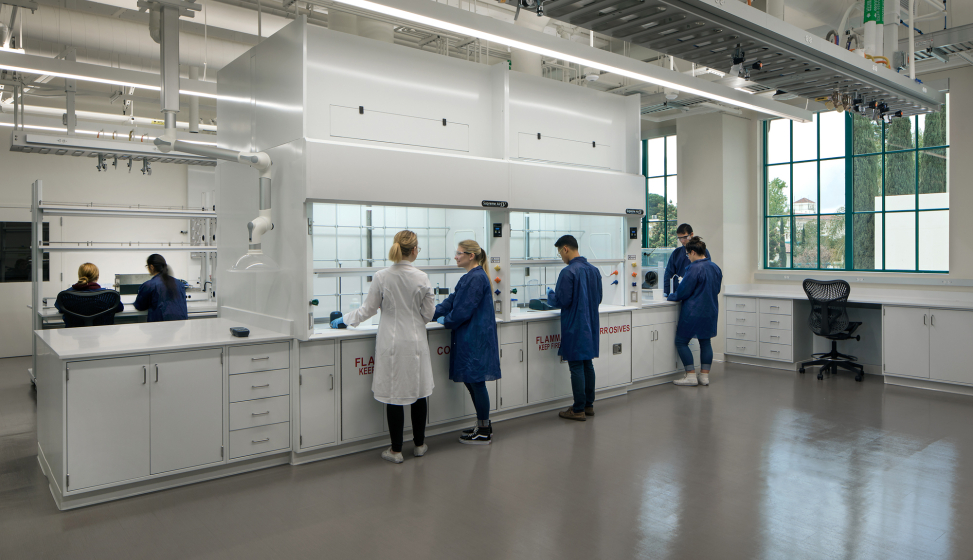
 

Groundbreaking: SDSU Imperial Valley Sciences & Engineering Laboratories

Photographed above: The Sundt Construction + AC Martin Design-Build Team

BRAWLEY, CA

Placer County Health & Human Services Center

Placer County Health & Human Services Center

Auburn, CA

Awards

Close
GALLERY

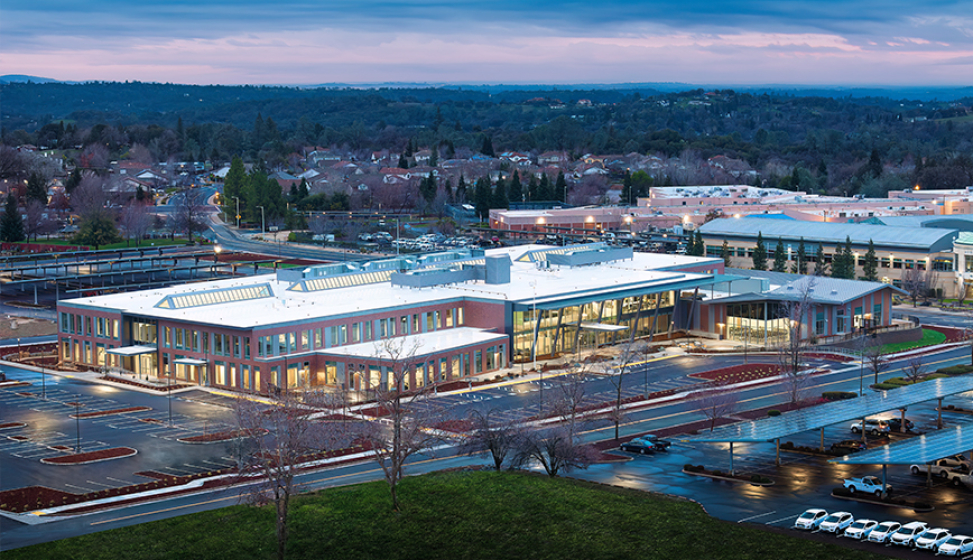
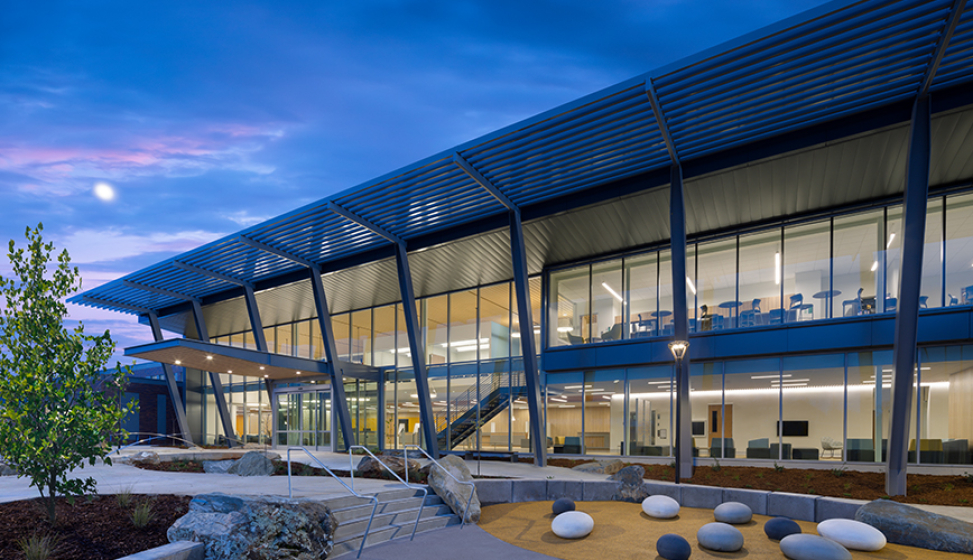
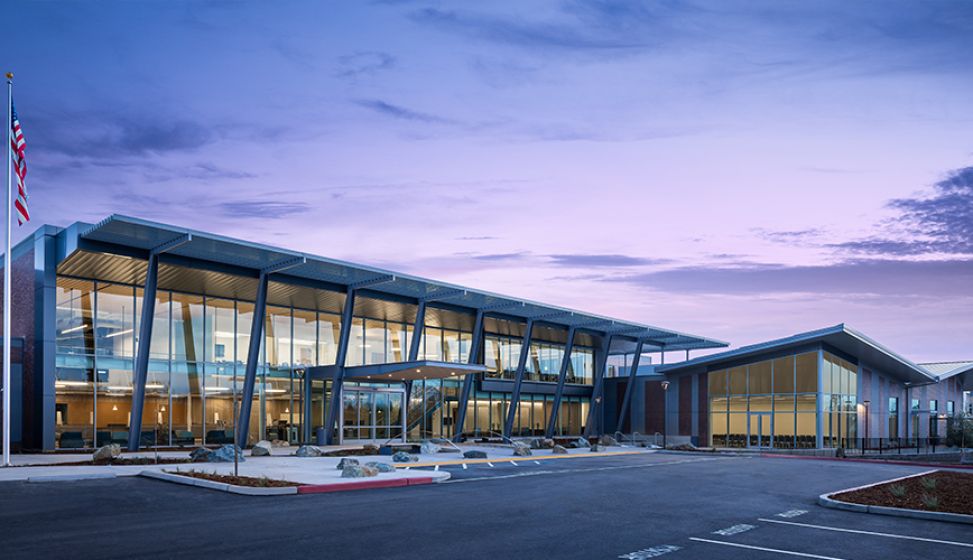
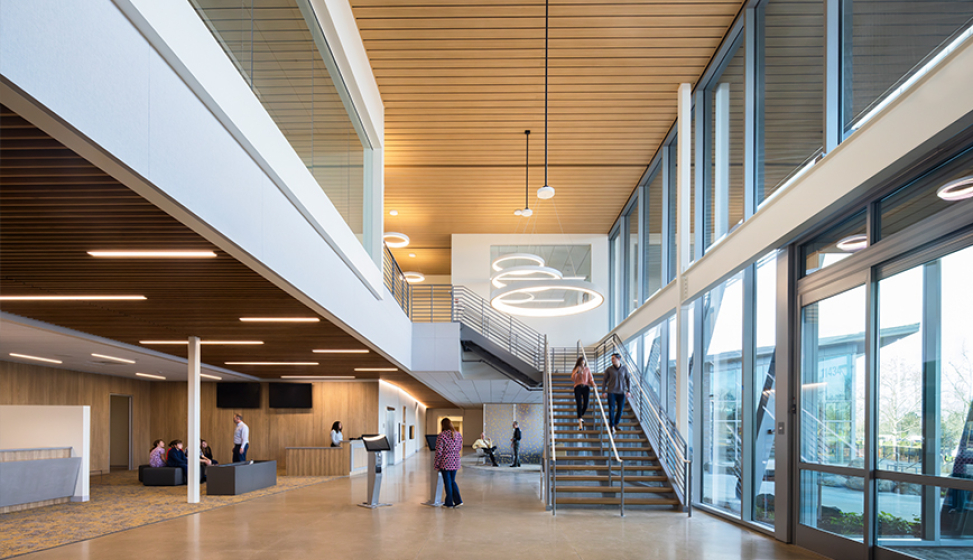
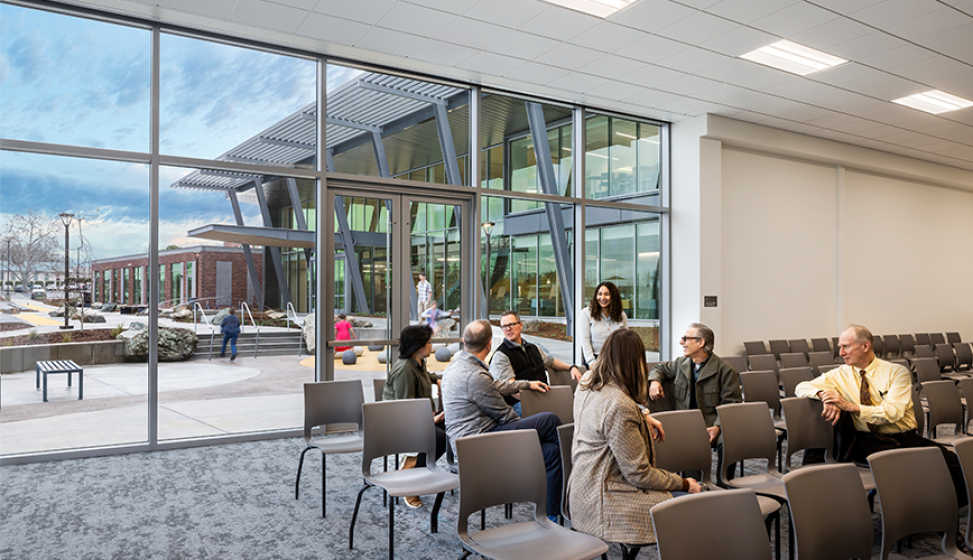
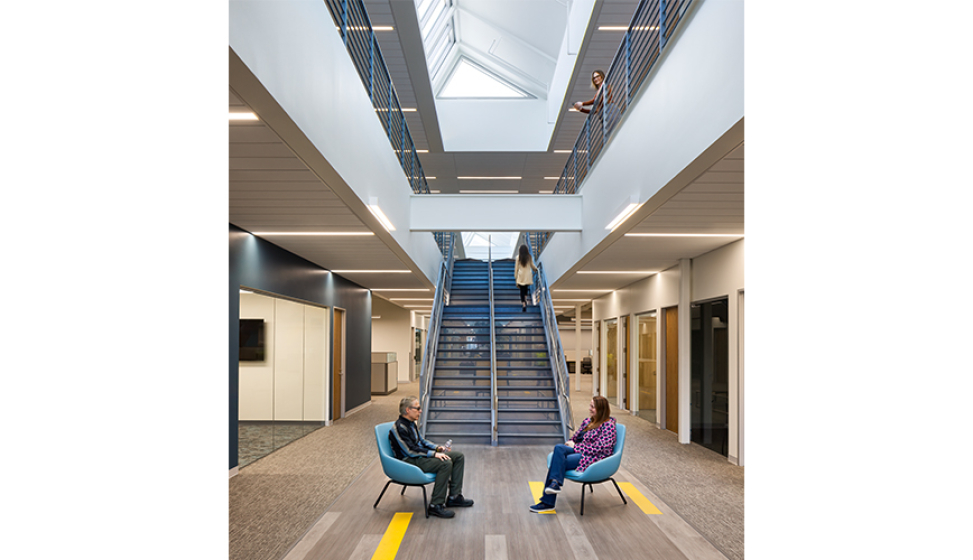
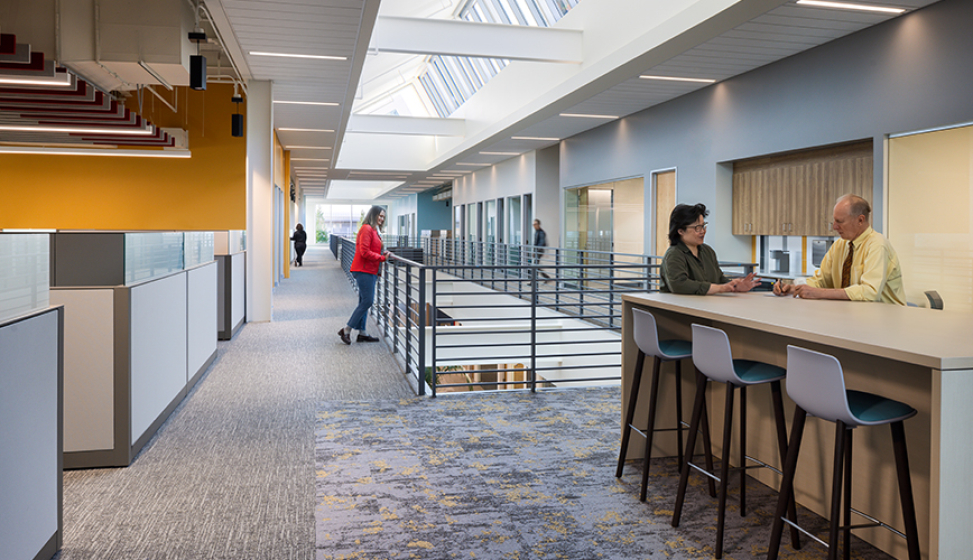
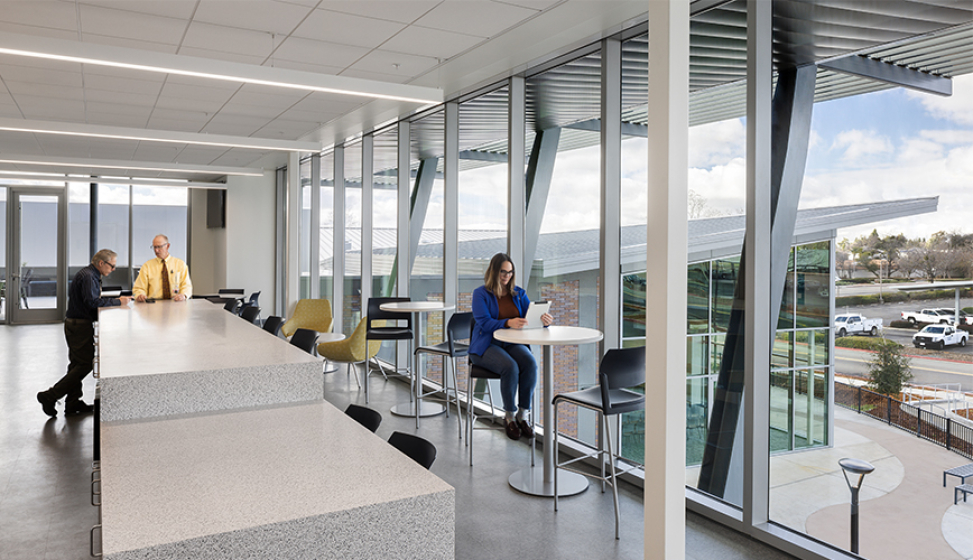
The 148,000 square foot Health and Human Services Center, the first Zero Net Energy building in Placer County, was designed to create a transformational experiential environment, enhancing the existing campus, and providing a positive impact on all that visit and work at the facility. AC Martin responded to the client’s desire to present a building to the community that is welcoming and responsive to the budget, but not overdone or extravagant. We took this desire to heart and developed an appropriately scaled building with a clearly marked entry, that reinforces the vision of the client. 

In addition to designing a project that is both functional and affordable, we looked for meaning to reinforce the client’s vision. The entry to the building is important functionally and symbolically. A bridge is an appropriate metaphor for the project, particularly at the front door as it represents the idea that the clientele will be crossing the bridge to better things. In addition, a landscape bioswale along the public entry showcases sustainable practices while intersecting the bridge at the front door. A gentle rise of the pathway reinforces the idea of crossing at threshold, causing one to pause briefly to observe the natural elements on either side.

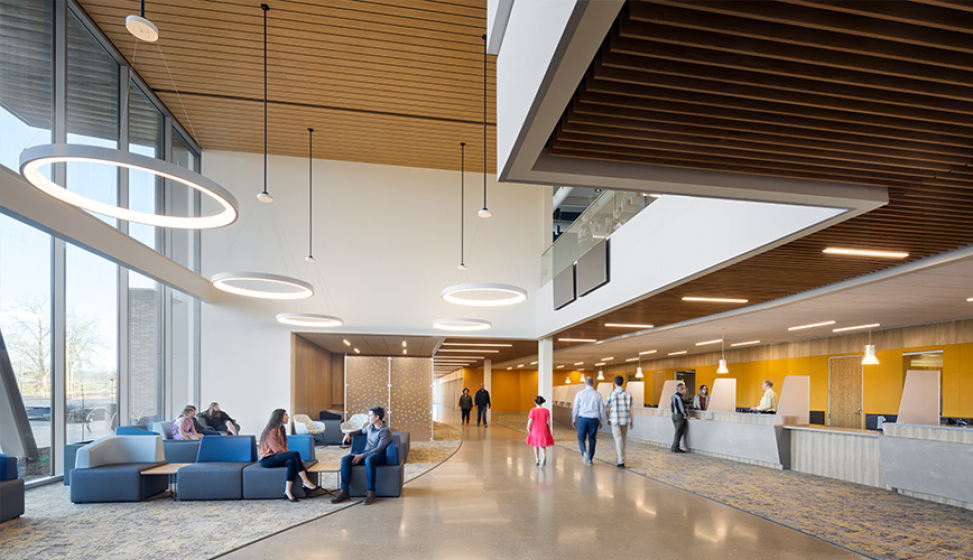
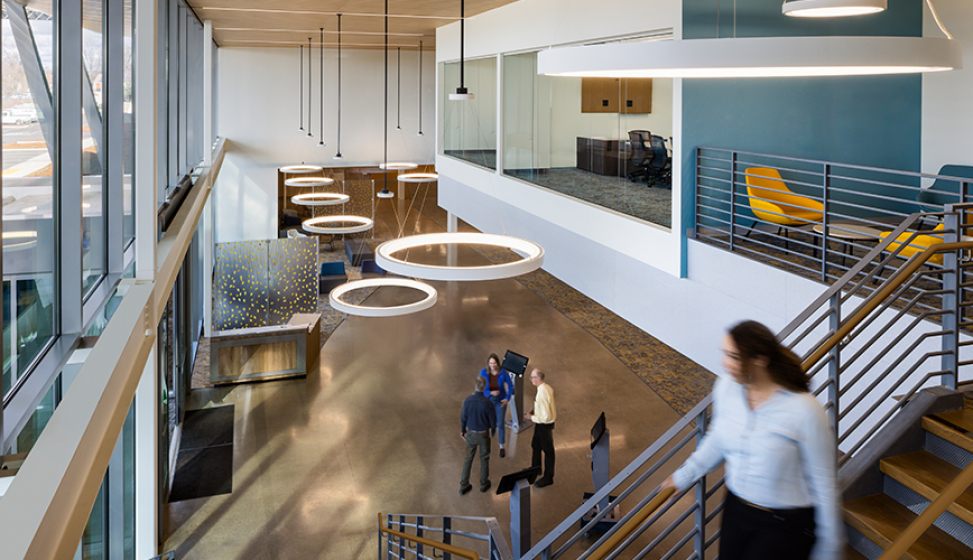
The overall organization of the building is informed by sensitivity to public interface, clarity of circulation, maximizing daylight, promoting cross divisional collaboration and future flexibility. The open Lobby space provides a clear view of the reception desk with visible signage directing one to the assortment of waiting areas. Designed to be intuitive and non-institutional in its expression, it is welcoming, warm, safe, and reinforces inclusivity.

Portside Ventura Harbor

Portside Ventura Harbor

Ventura, California

Awards

Close
GALLERY

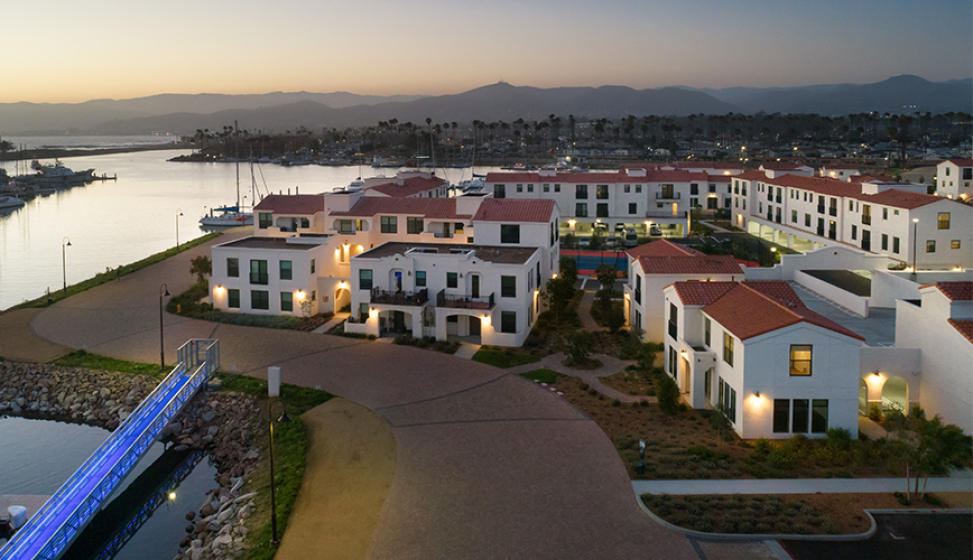
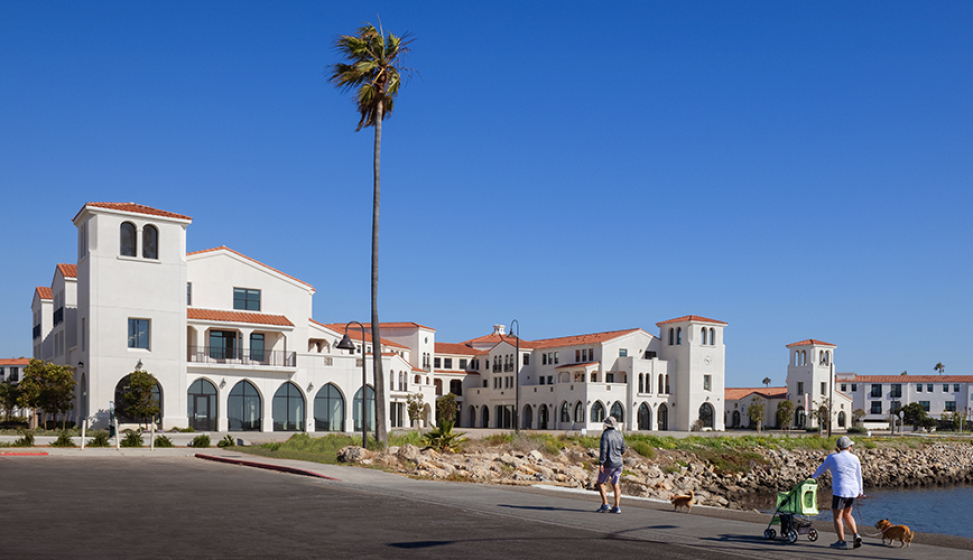
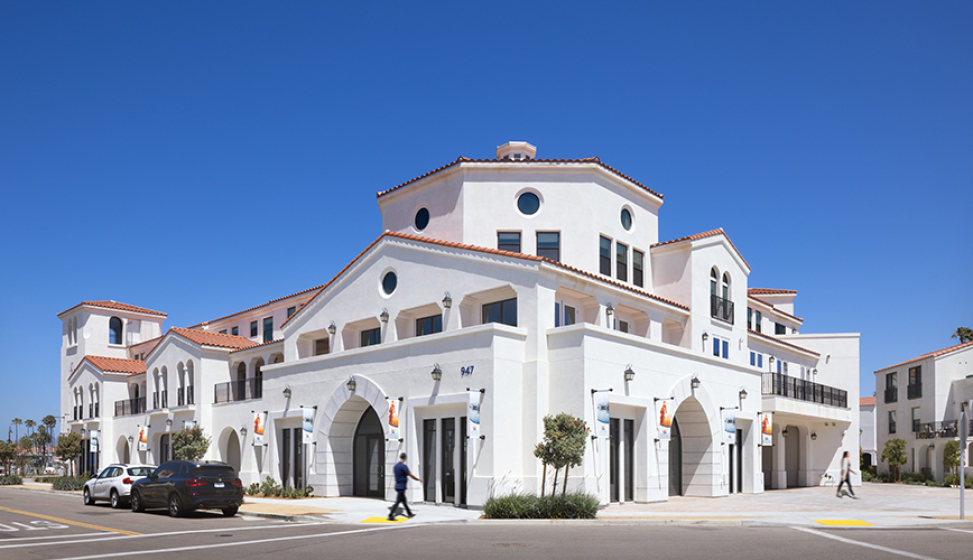
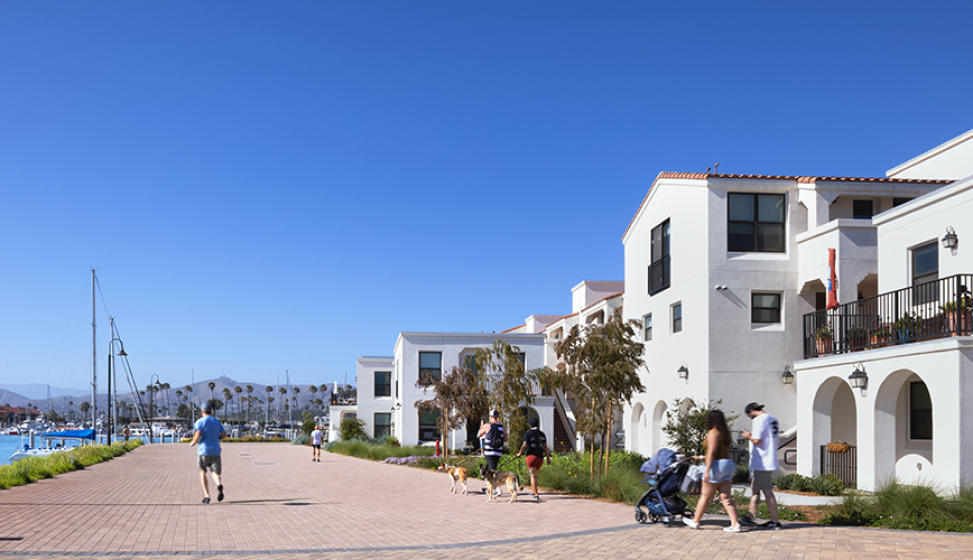
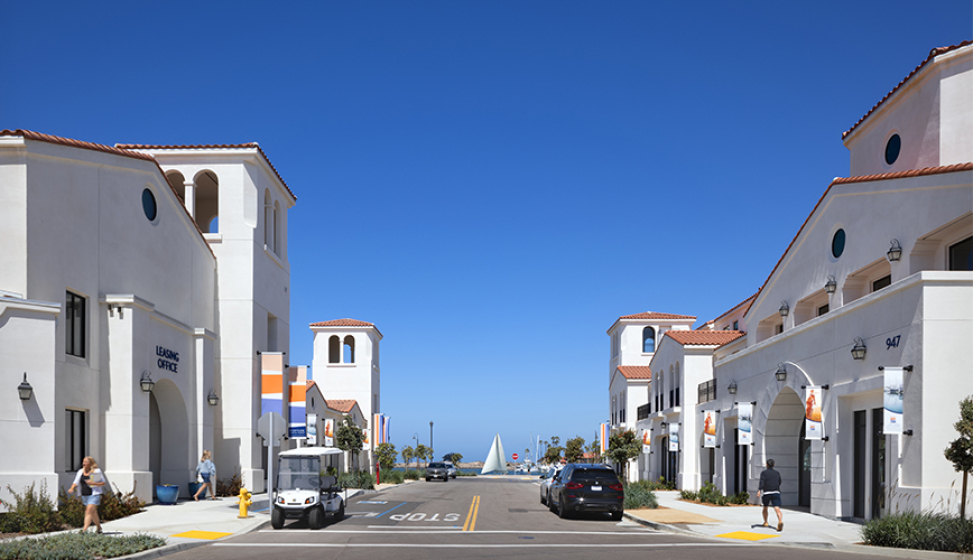
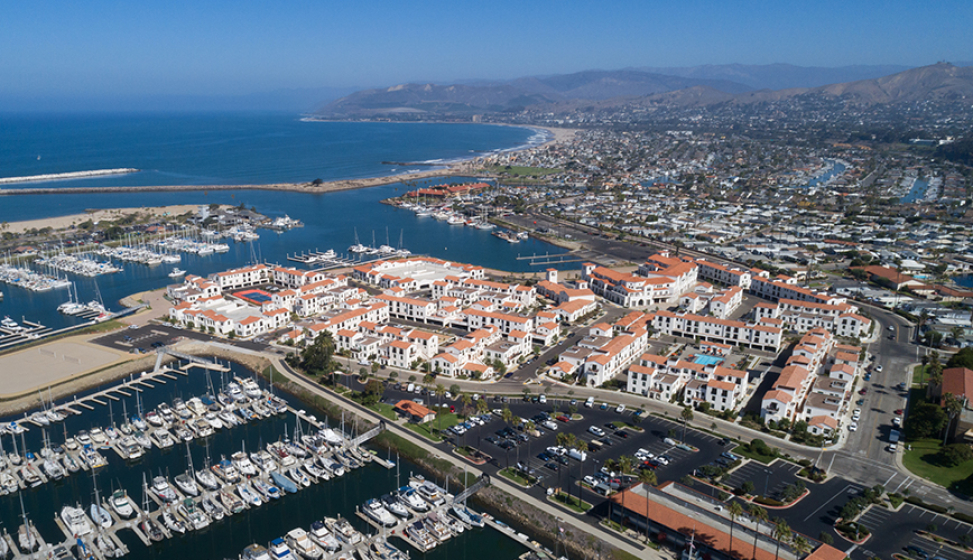
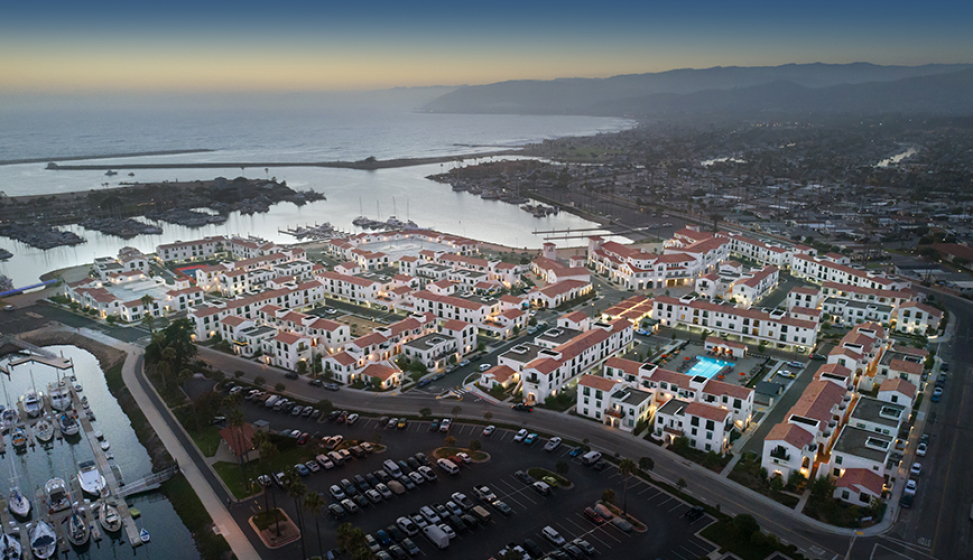
Inspired by classic Spanish Colonial-style architecture combined with modern amenities, this 26-acre residential community development in Ventura, California is comprised of 10 bungalows, 132 apartment homes, and 128 townhomes. Various unit sizes include studio, one-, two- and three-bedroom layouts. The project also includes high-end residential amenities such as a private clubhouse, pool, spa, tennis courts, pet park, and much more to provide world-class tenant experience. 

Situated by the public port, the residents and visitors of Portside Ventura Harbor have the waterfront view and can take an advantage of both the California weather and the location through outdoor activities such as boating and going for a jog along the pedestrian-friendly sidewalks as well as a nearby 2.5 acre public park at the other end of the site.

Fifth District Court of Appeal

Fifth District Court of Appeal

State of California

Fresno, California

Awards

Close
  • 2008 Honor Award
    • AIA San Fernando Valley Chapter
  • 2008 Distinguished Project Awards
    • Western Council of Construction Consumers
Awards
GALLERY

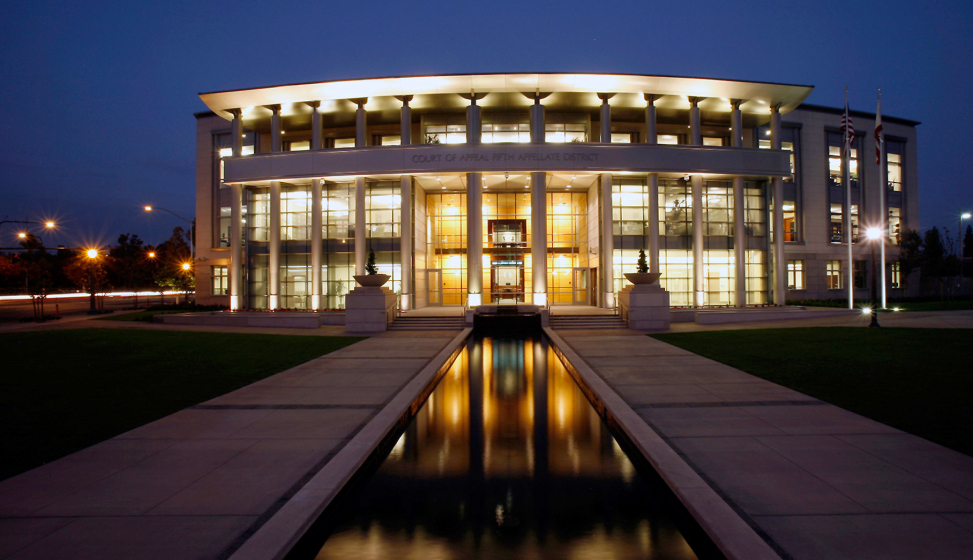
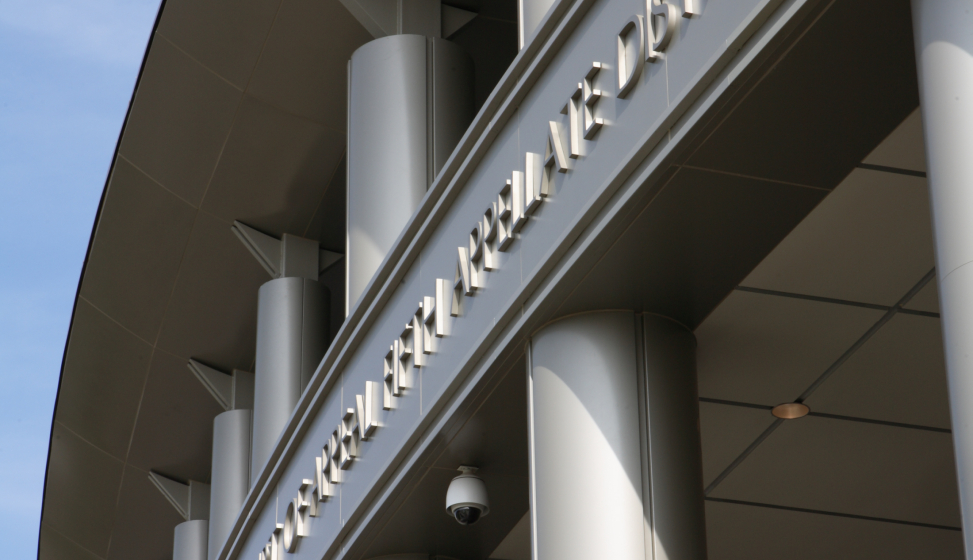
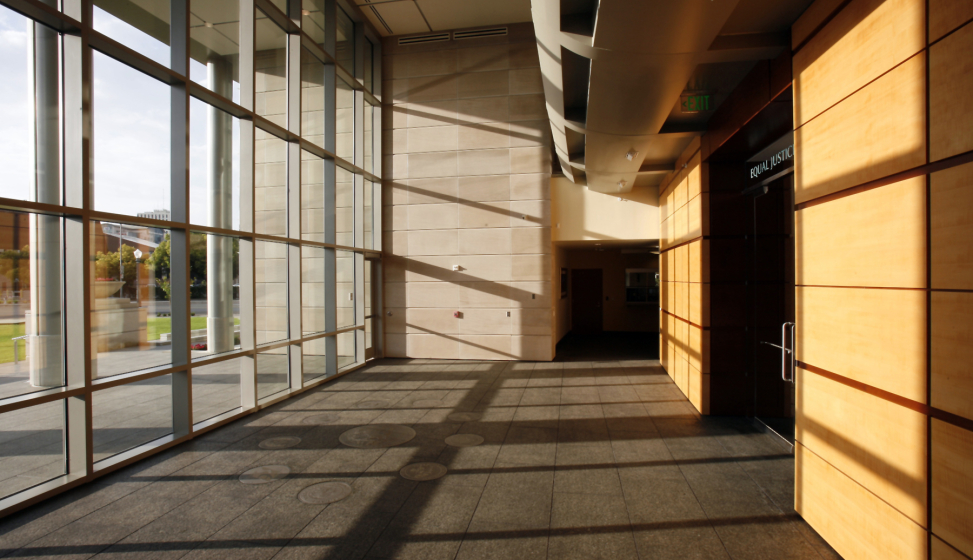
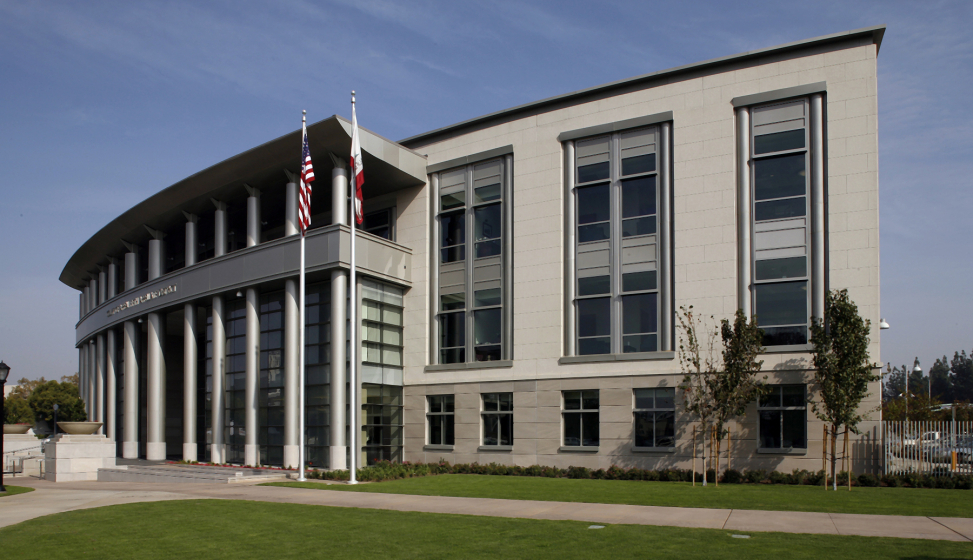
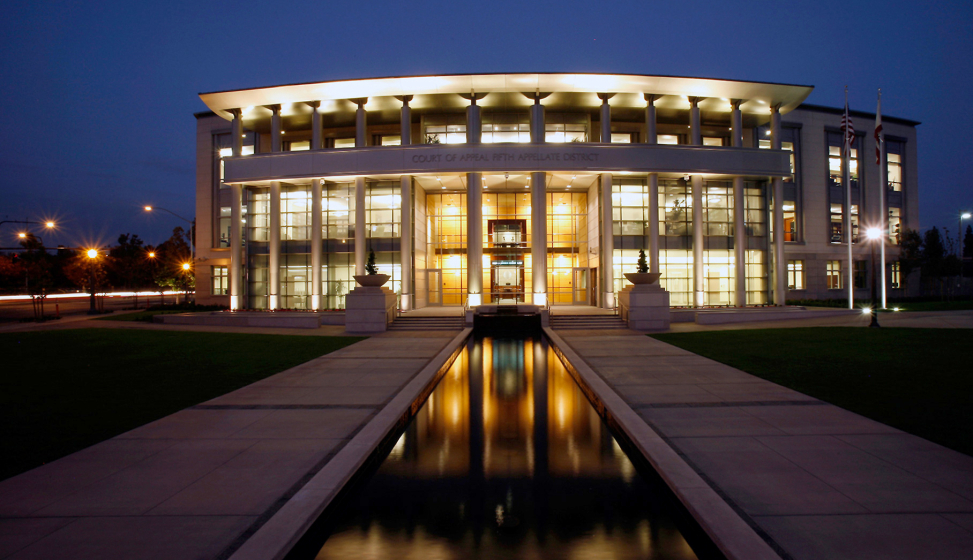
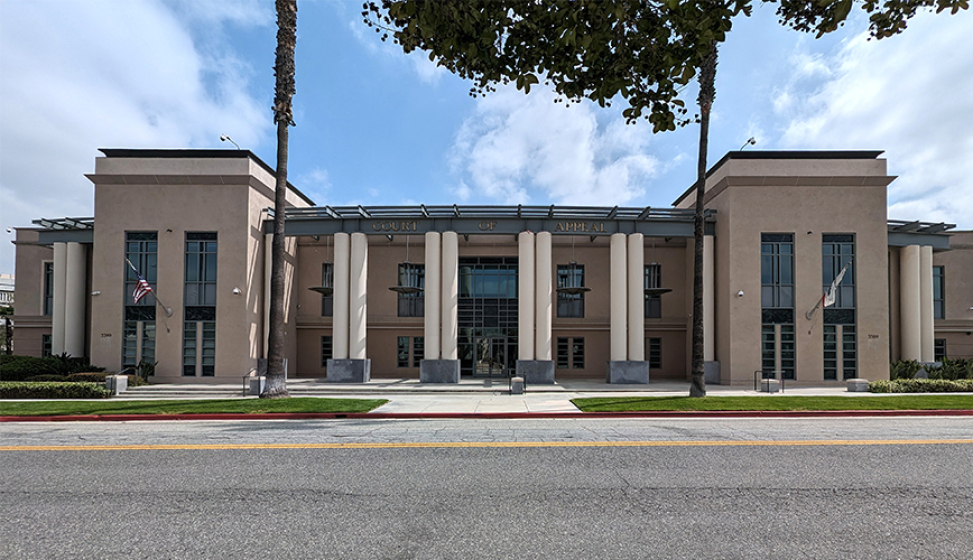
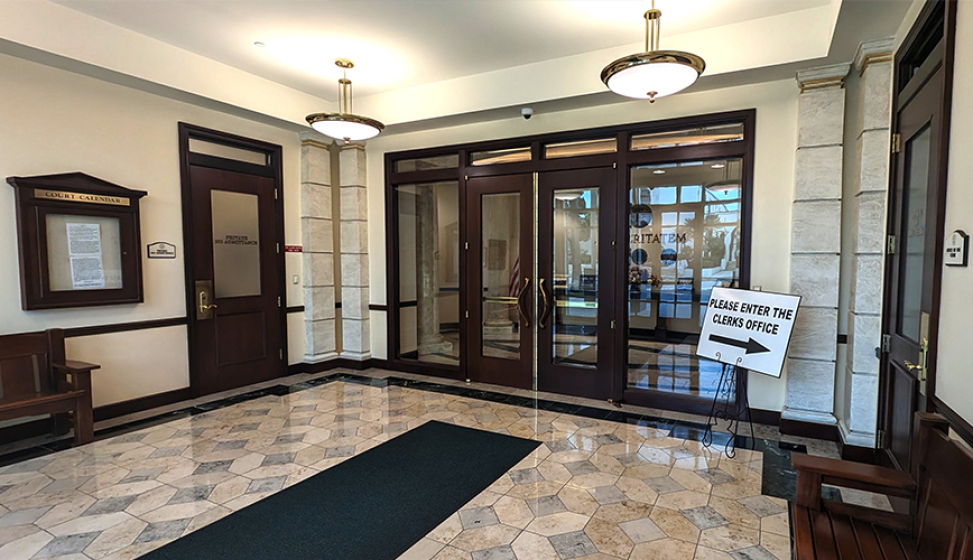
The new Fifth Appellate District Courthouse in Fresno, designed by AC Martin, is a dignified and meaningful place of justice. The three-story, 61,000-SF building is located in the City’s ‘Old Armenian Town’ district on a 1.25-acre parcel, and includes a single courtroom and chambers for ten justices, offices for attorneys and staff, clerk/administrative offices, a library, conference spaces that support appellate courthouse operations, and secured parking. 

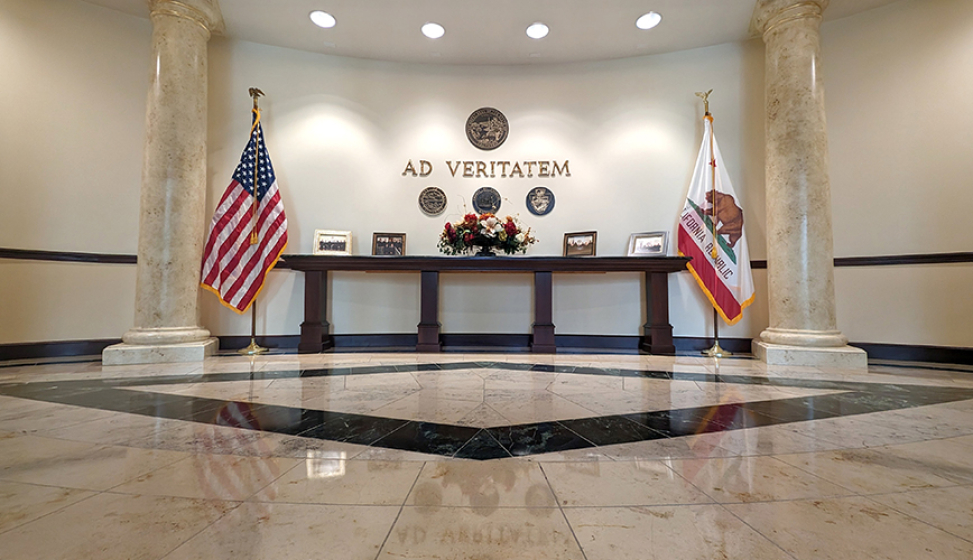
The building creates an edge to a pedestrian plaza complete with stone bands simulating rows of vines, pergola with wisteria, and a promenade lined with an orchard of flowering fruit trees, reminiscent of Fresno’s agrarian tradition. As visitors approach the limestone and glass building, they are welcomed by a reflecting pool and the warm wood-paneled walls of the public lobby. 

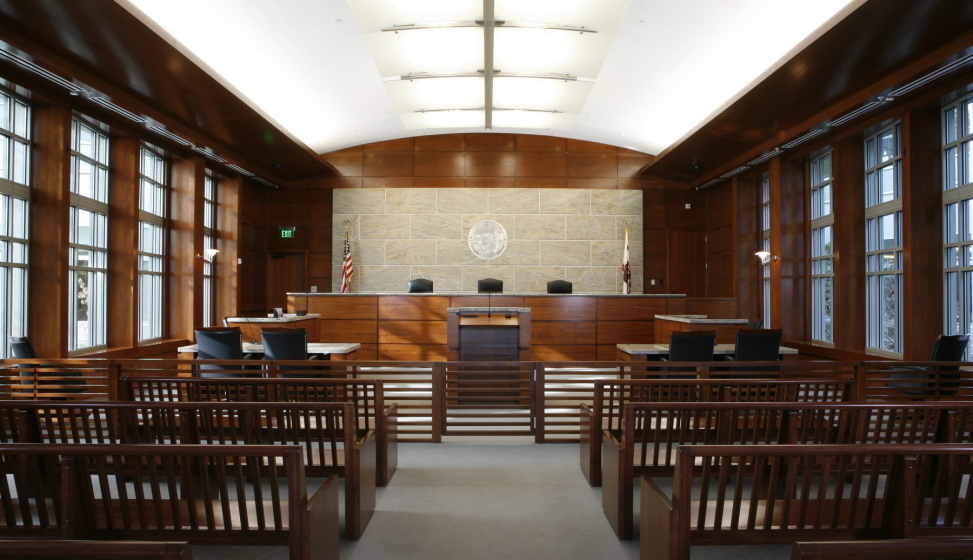
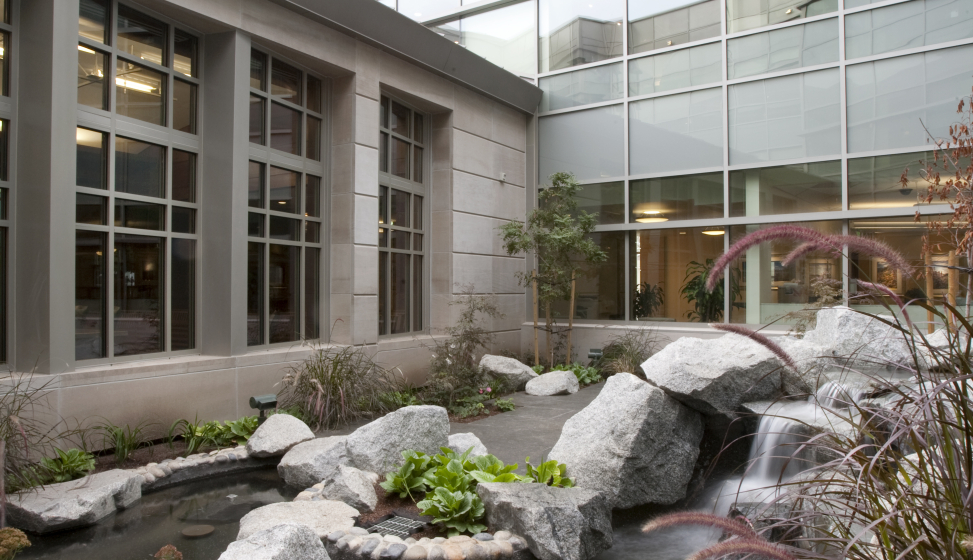
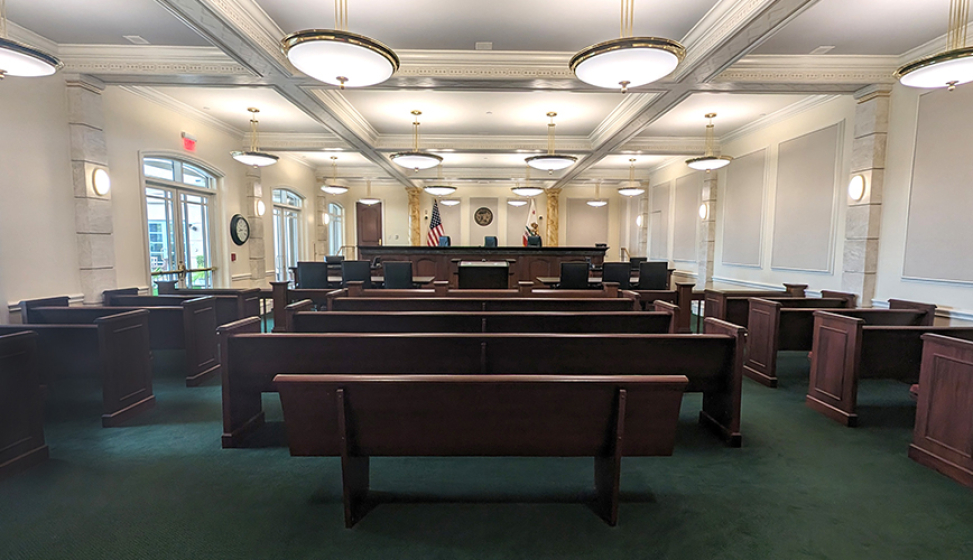
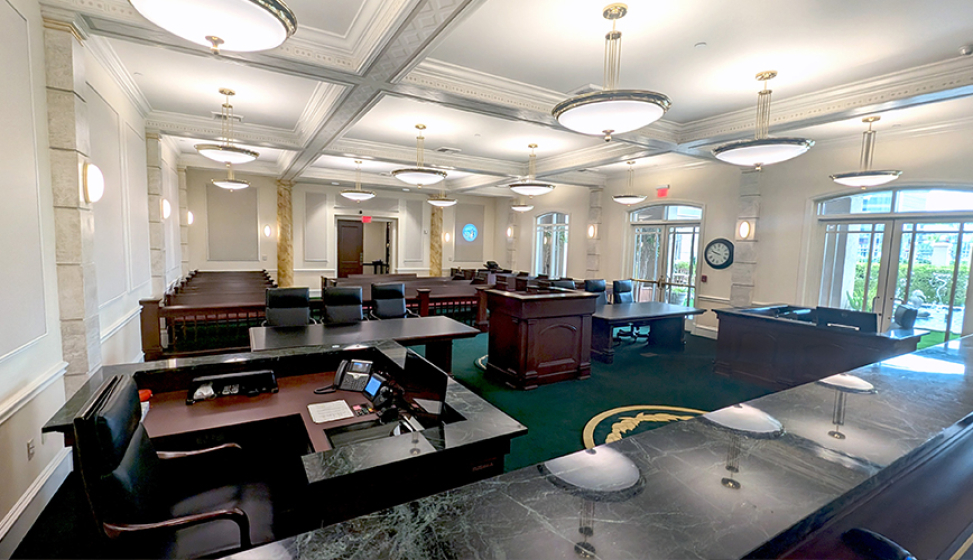
The courtroom itself is designed to be a destination, a place of openness, contemplation, and dignity. The tall windows flanking the courtroom look out onto courtyards, complete with a trickling fountain and landscaping indigenous to the San Joaquin Valley.

In keeping with the State’s Appellate Court Facilities Guidelines, the design facilitates safe and efficient court functioning while taking into account use and visibility of space. Avoiding the pitfall of the traditional maze-like interior spaces, AC Martin created a design that promotes excellent way-finding, and provides natural daylight and optimal views for all office spaces.

The site and parking areas, the courthouse perimeter, building entrance and interior spaces consist of active and passive security measures. The courthouse design includes up-to-date data/telecom and audio-visual systems to support its infrastructure requirements.

Fourth District Court of Appeal

Fourth District Court of Appeal

State of California

Riverside, CA

Awards

Close
GALLERY

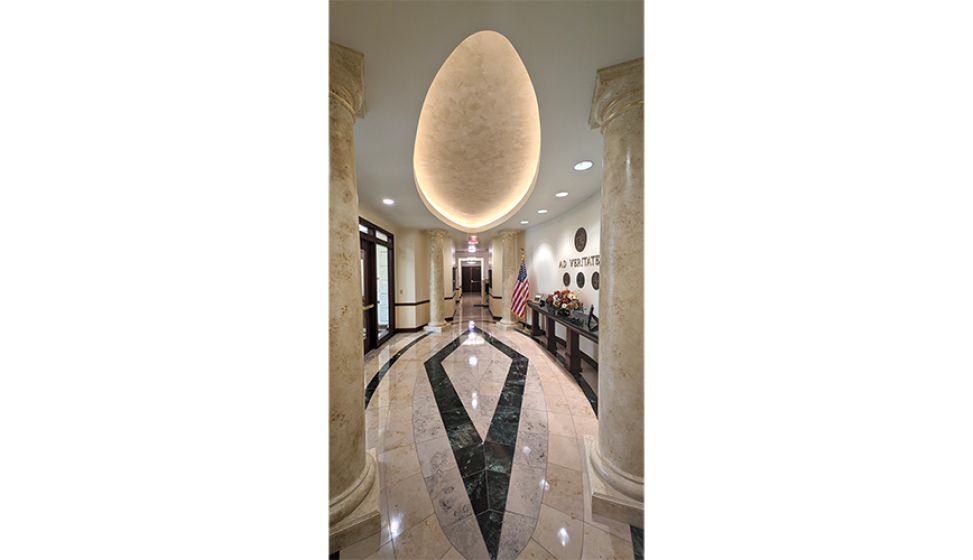
AC Martin, as a member of a Design-Build team with Swinerton & Walberg and Vitetta Group, provided architecture and engineering services for this 42,000 square foot State Appellate Court, which includes a 1,600 square foot courtroom, judicial chambers, and a 2,300 square foot law library. The dignified two-story design complements the architecture of downtown Riverside’s historic public buildings. An ellipse of two-story high columns connected by a steel-trellised canopy creates an elegant entrance that recalls the visual hallmarks of courthouses. The primary tenant of the building is the State of California Court of Appeal, 4th Appellate District, Division 2. The development timeline was 24 months and the facility was completed on time and on budget.

“This building sits in perfect architectural harmony and context with the greater community. The pergola, slight curvature of the front, the breezeway at the back of the building and the beautiful water fountain and courtyard are all distinctive architectural elements that exist throughout Riverside and San Bernardino counties as well as in the Inland Empire.”

- Hon. Manuel A. Ramirez, Presiding Justice Fourth District, Division Two Court of Appeal

Engineering & Interdisciplinary Sciences Complex, San Diego State University

Engineering & Interdisciplinary Sciences Complex

San Diego State University

San Diego, California

Awards

Close
GALLERY

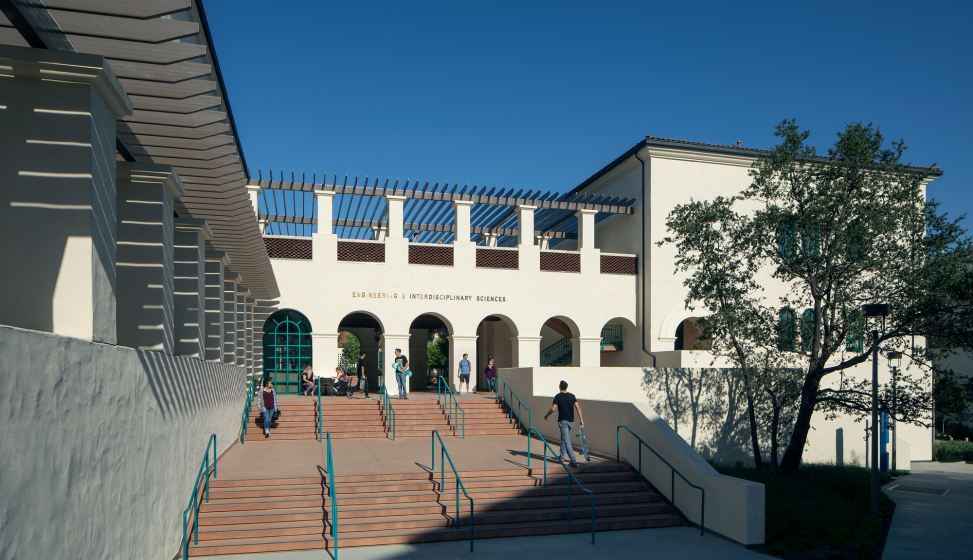
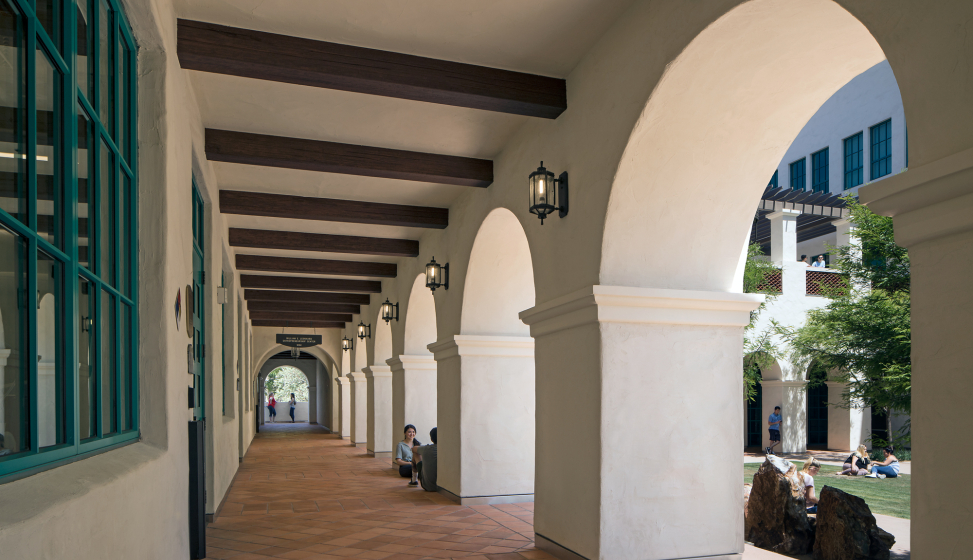
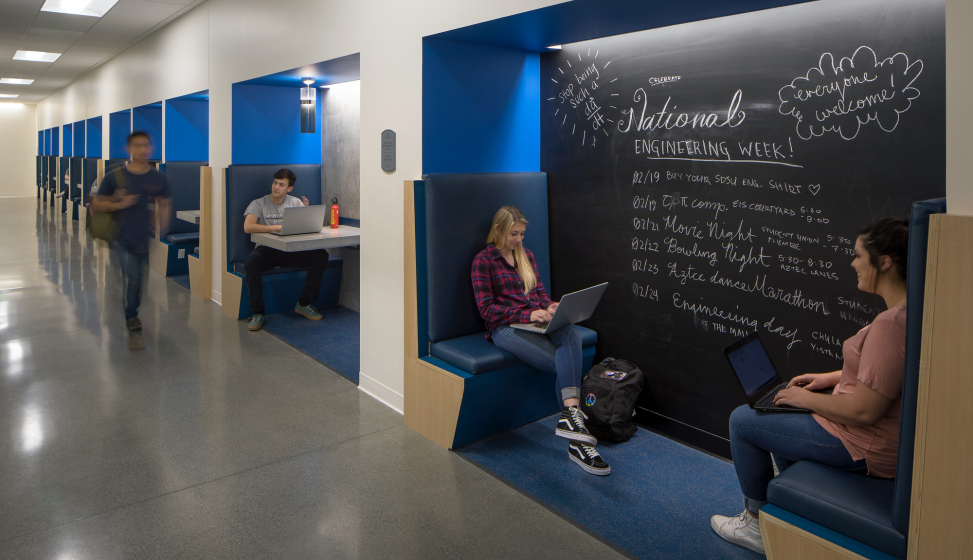
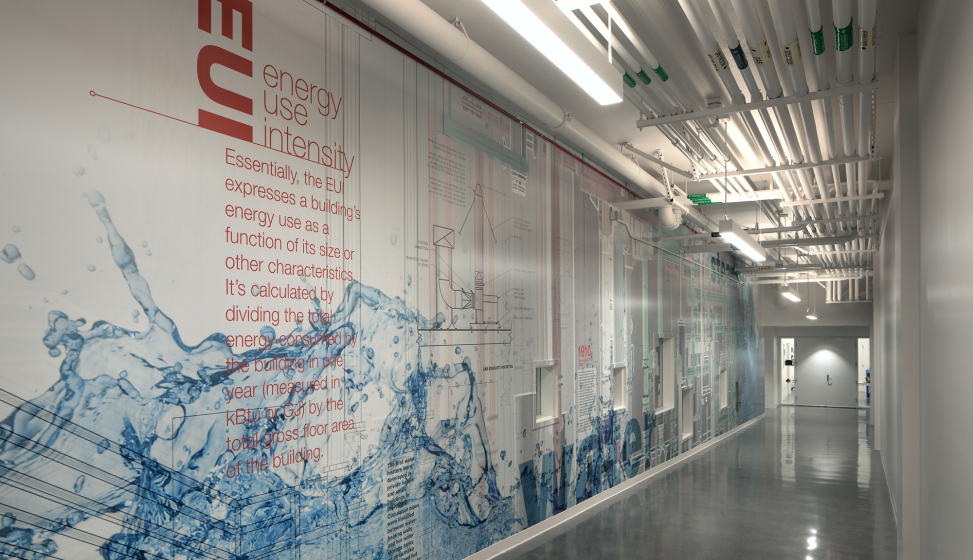
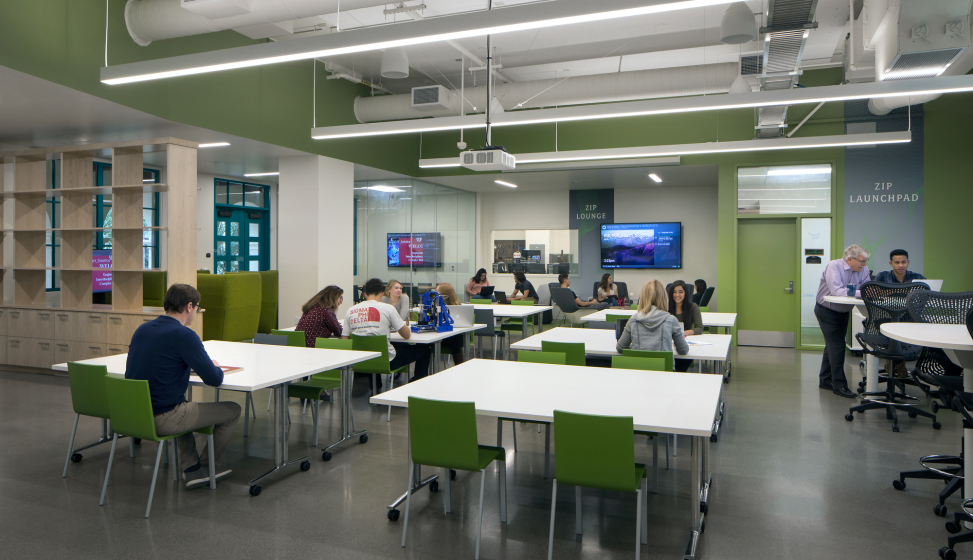
The LEED Gold-certified Engineering and Interdisciplinary Sciences (EIS) Complex is a significant addition to San Diego State's (SDSU) STEM programs. The program includes Engineering teaching labs and flexible research space for a wide range of interdisciplinary science programs including Wireless, Bio-medical/Bio-Engineering, Bio Chemistry and Energy research plus shared core labs for Viromics, Materials Science Imaging, MRI Imaging, and a Clean Lab. The Entrepreneurial Center and Creative Design Garage “Maker Spaces” with their fabrication shops provide spaces for faculty, staff and students to collaborate.

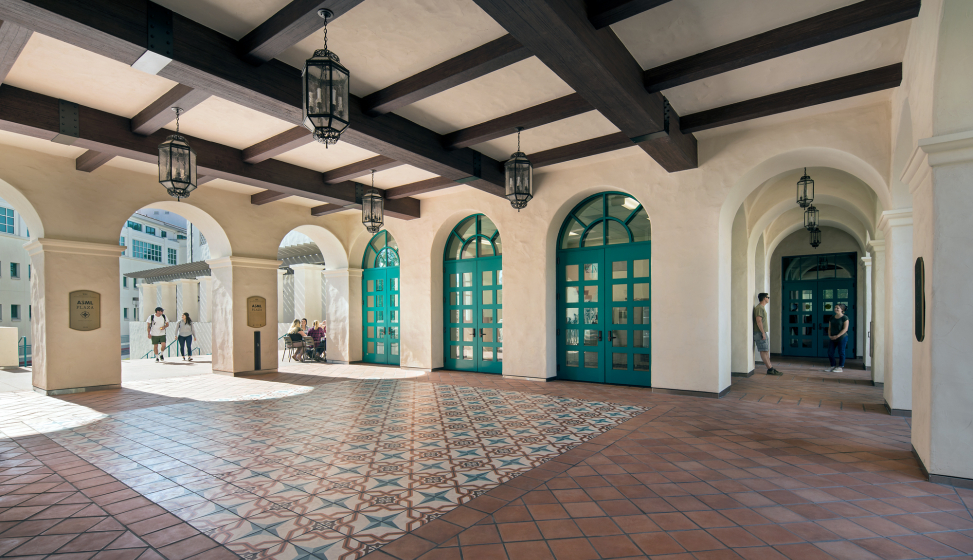
Building in the historic core. The goal of the EIS Complex was to fit into SDSU’s historic core of Mission Style architecture. The challenge was to take a modern lab building with 16 feet floor to floor and put it inside of an architectural shell that would fit in with buildings from the 1920’s. The project is laid out in a courtyard configuration with two separate wings of teaching and research labs (north and south) connected by a wing with shared amenities for the whole complex.  The main entry is an open air covered patio with a café that opens onto the STEM courtyard with meeting rooms, a coffee shop and plenty of outdoor seating to invite people to linger and talk. Ground floor spaces are entered through covered colonnades and the building facades use large windows, balconies, covered patios and open-air terraces to break down the scale of the building and fit within the surrounding historic structures.                                           

Teaching and Research Labs. The EIS building has teaching labs for: Hydraulics, Fluid Mechanics, Mechanical Thermal and Materials, Soils and Environmental disciplines.  Prior to the EIC Complex opening these teaching labs were taught in a series of existing buildings from the 1960’s. The vision for the new teaching labs is to create spaces that are connected, modern and flexible; that can change over time as teaching pedagogies and technology change. Additionally, the vision for the EIS building is to create flexible modern research space that SDSU can use to attract new interdisciplinary faculty that will enhance SDSU’s research capability. The research anticipated in this facility will focus on energy, wireless technologies and bio-medical engineering and bio-materials as well as focused research in the area of viromics. Flexibility is built into each lab with mobile benches and overhead utility distribution. Faculty offices, post doc and grad student work stations are outside the laboratories with a priority for close proximity and visual connections to the research functions.

Entrepreneurial Center. This center brings together the Zahn Innovation Center (a commercial and social incubator supporting aspiring entrepreneurs as they transform their ideas into companies) and the Lavin Entrepreneurship Center (which serves student and faculty business leaders through its entrepreneurial curriculum and resources) in a design and business Incubator. Together they help faculty and students develop ideas through diverse hands-on learning opportunities enabling participants to translate their knowledge into practice. The center has a Fabrication shop, Design Center, collaboration spaces and meeting rooms.

Gates-Thomas Laboratory, Caltech

Gates-Thomas Laboratory

California Institute of Technology

Pasadena, California

Awards

Close
GALLERY

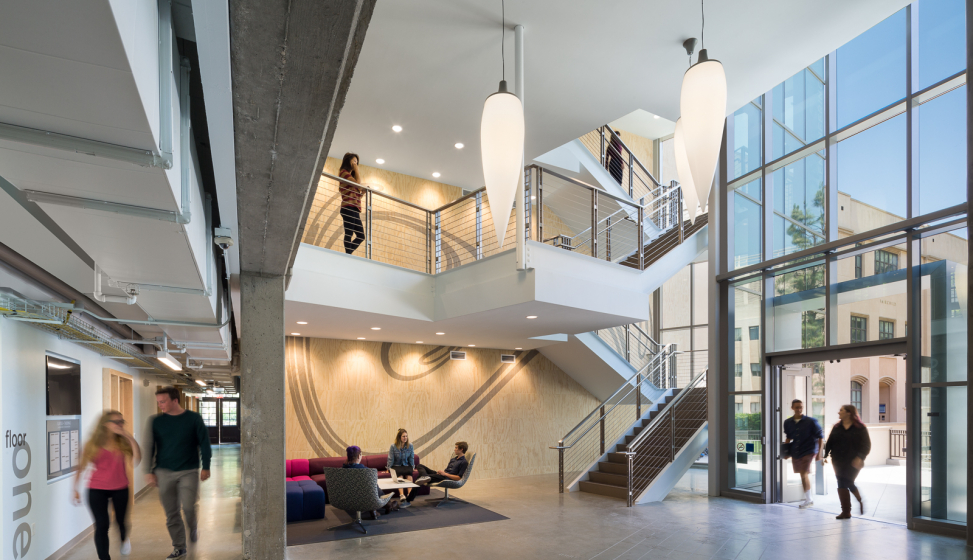
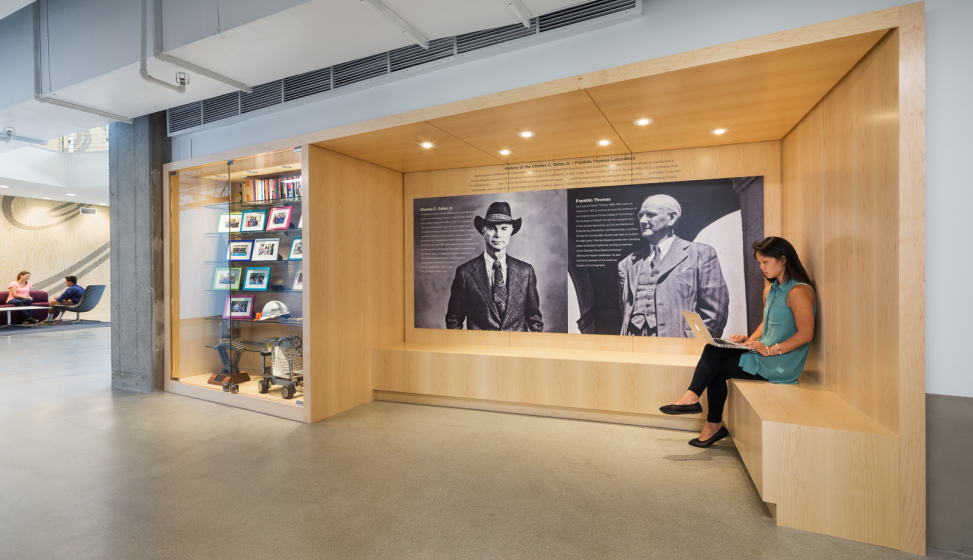
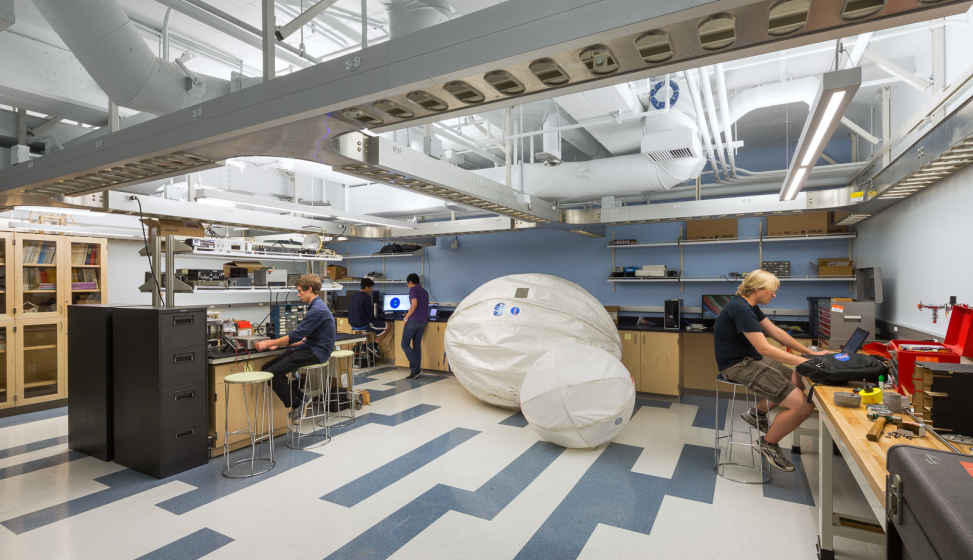
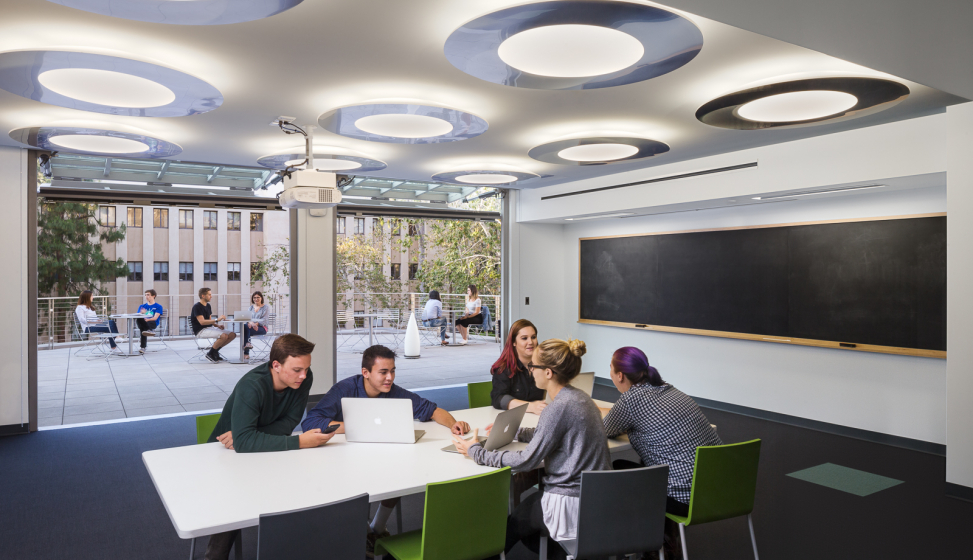
The Charles C. Gates and Franklin Thomas Laboratory on the campus of California Institute of Technology (Caltech) in Pasadena, California houses the Department of Mechanical and Civil Engineering. The renovation ushers in modernization while honoring the lab’s storied past and the people who helped advance engineering at Caltech. The original structure was completed at the close of World War II, when human spaceflight was still years in the future and the idea of nanotechnology had not even been conceived. The updated Gates-Thomas Laboratory provides new laboratories and light-filled spaces where scholars, faculty and students can collaborate and engage in experimental and computational work undreamed of when the building opened its doors.

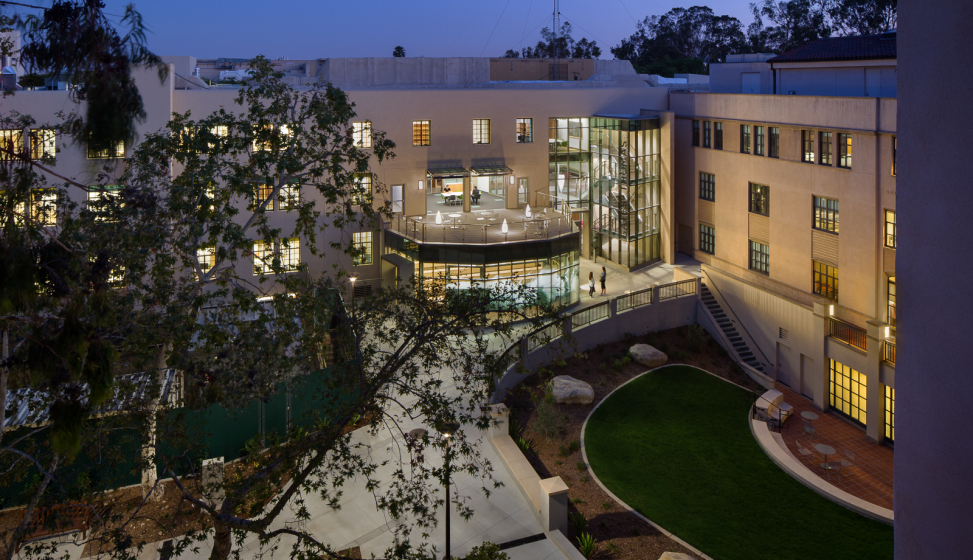
The 54,300-SF facility was challenged with substandard infrastructure unable to support the robust research taking place. The closed-in institutional look and feel of the building failed to convey the prestige of the Engineering Department and provided few opportunities for interaction. The building faces Olive Walk, a lovely tree lined park, to the South and a landscaped courtyard to the north. The architect's approach sought to connect the courtyard “garden” to Thomas-Gates Laboratory, to open the building up both physically and symbolically.

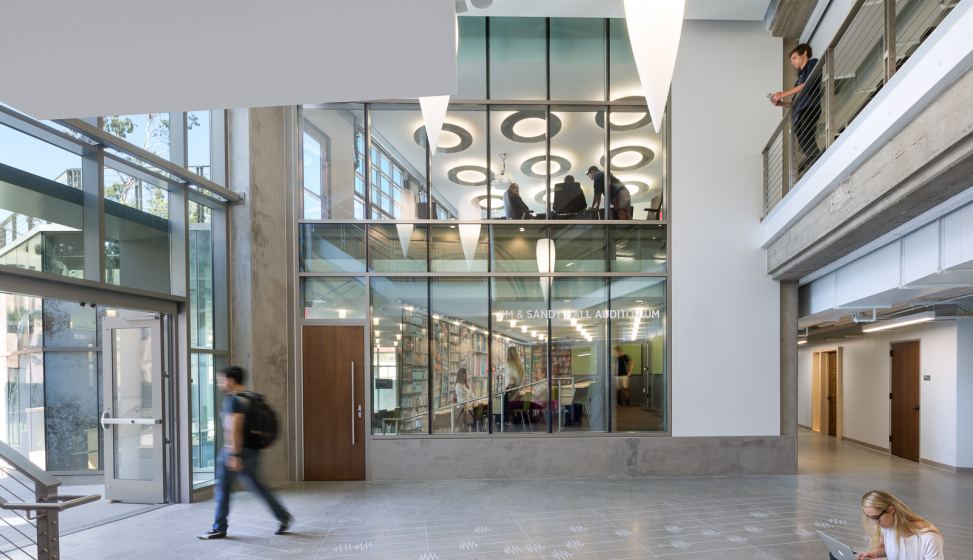
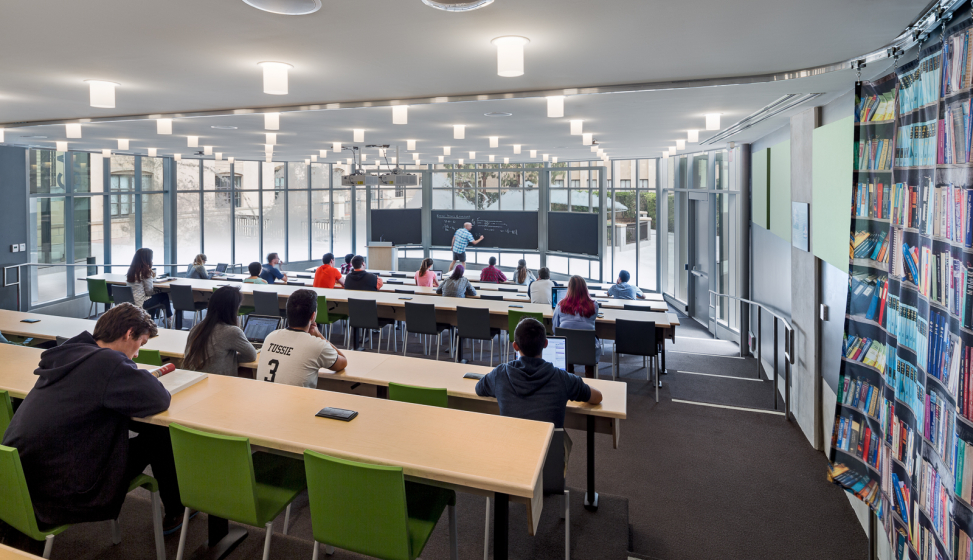
The architect’s solution introduces a two-story entry anchored by a glass-enclosed stair connecting the upper floors. The stair is deliberately located at the building’s midpoint to draw inhabitants up and through the building in a visible and dynamic fashion. A wall graphic representing the “Poincare Section of a Duffing Oscillator”, lines the stair. The floor at the lobby features an etching illustrating the year and latitude of major earthquakes from 1949 to 2011. The glass enclosed 88-seat auditorium extends beyond the original footprint. Transparent as possible while maintaining functionality, the space allows the community to observe the important science being discussed and taught. The auditorium is planned to host guest lecturers as well as regularly scheduled classes. A translucent fabric screen with images of the current faculty member’s bookshelves can be drawn to encourage "reluctant" students to the front of the room.

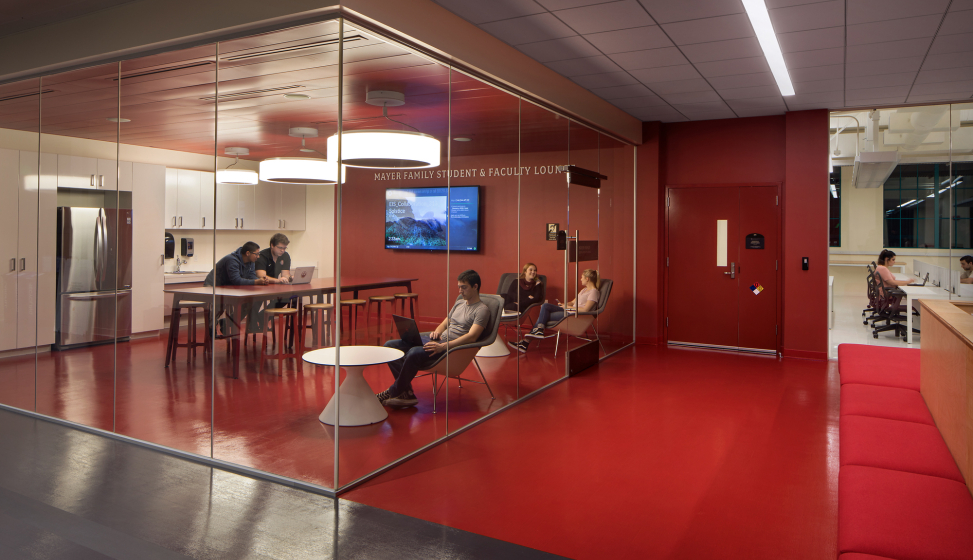
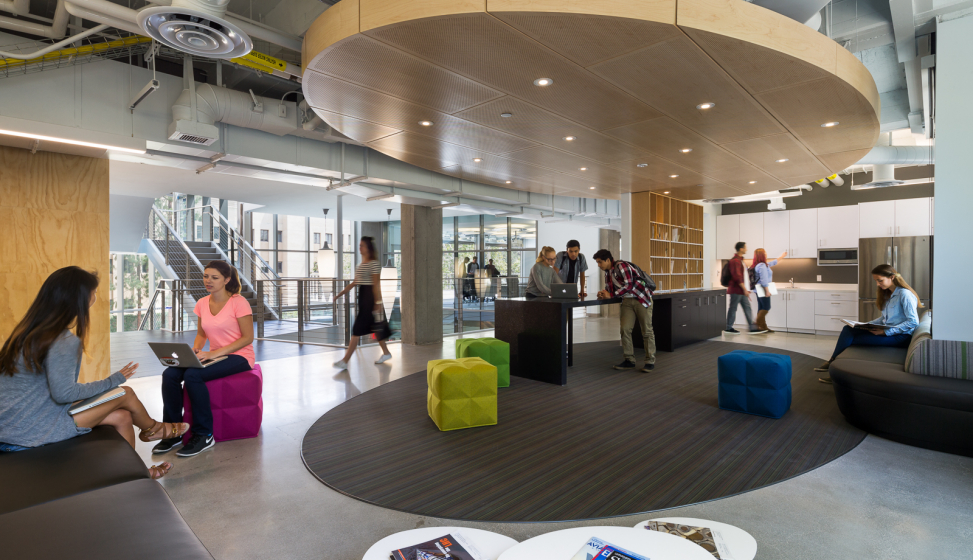
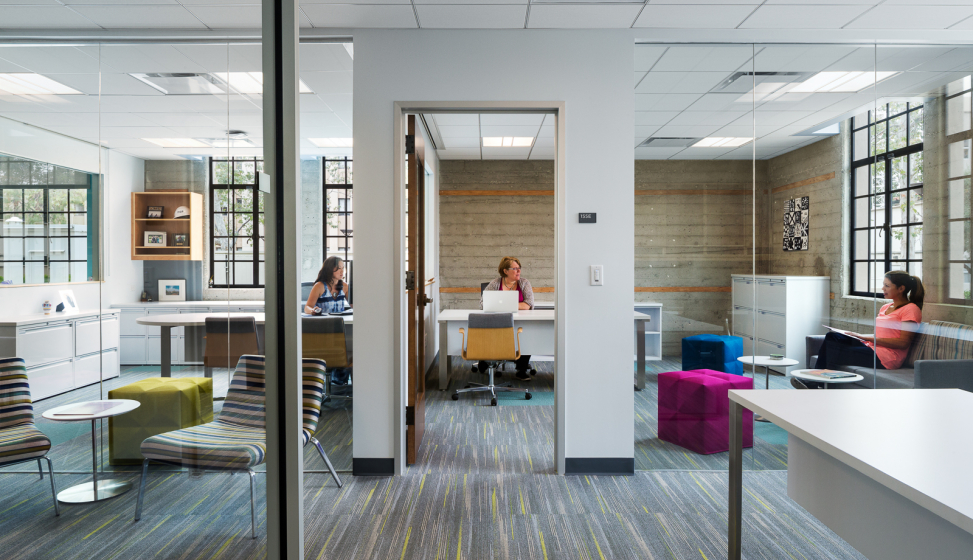
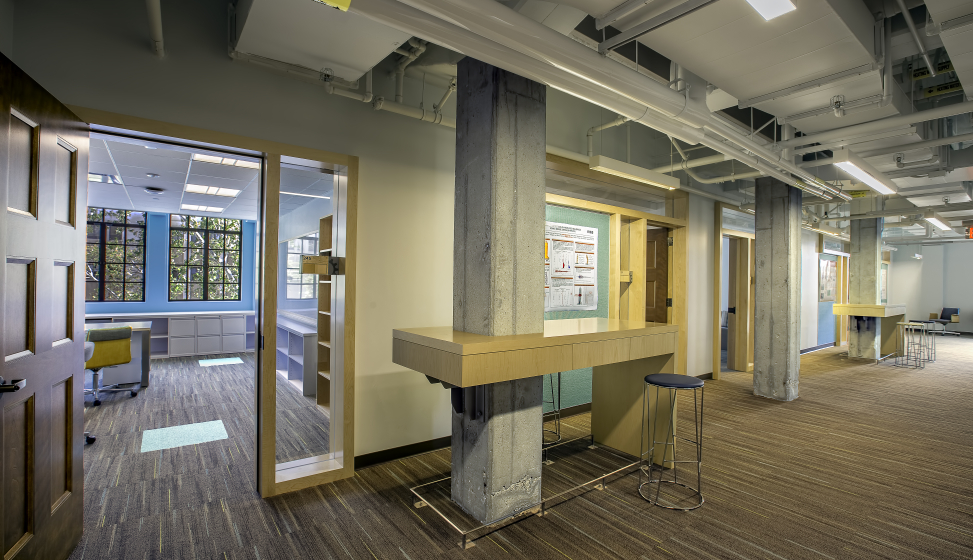
Strategically located at the second floor landing, the lounge is the heart of the department. The gathering space encourages collaboration and conversation beyond the research labs and classrooms. It is open and spacious, with views to both Olive Walk and the garden to the north. The new seminar room, with direct access to the roof terrace, can serve as an extension of the lounge during events. The faculty office "neighborhoods" are connected by a generous corridor with clerestory windows and integrated collaboration tables.

Throughout the project, the architect sought opportunities to expose and retain as much of the existing concrete frame structure as possible. Corridor ceilings are exposed due to constrained floor to floor heights and a desire to reveal the “workings” of the building systems.

Graduate and post-doctoral candidates spaces allow for group study and collaboration as well as quiet research.


Keck Center for Science and Engineering, Chapman University

Keck Center for Science and Engineering

Chapman University

Orange, California

Awards

Close
  • 2019 SPIRE Awards - Superior Performance in Real Estate
    • New Construction Category -  Winner
  • 2016 American Institute of Architects (Orange County Chapter) Design Awards
    • Commercial Category (Unbuilt) - Citation
Awards
GALLERY

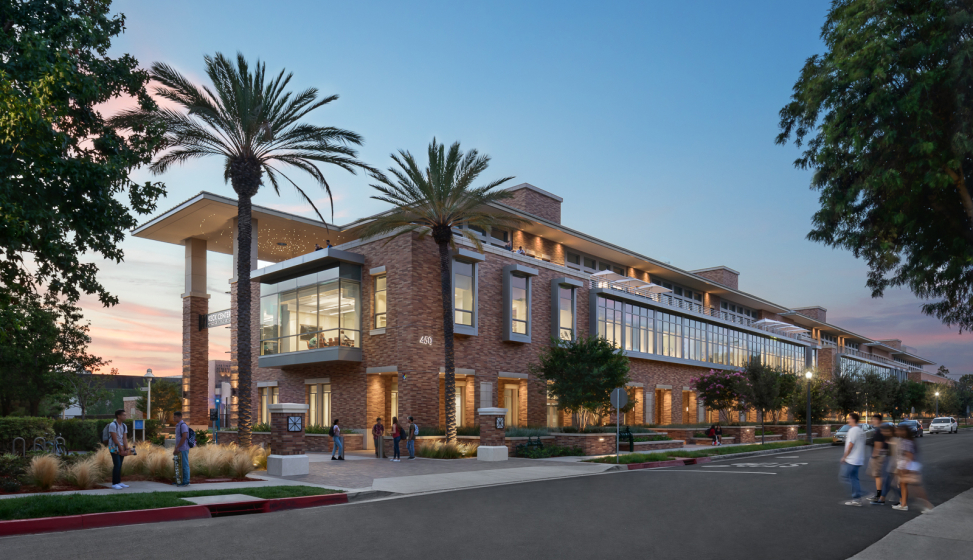
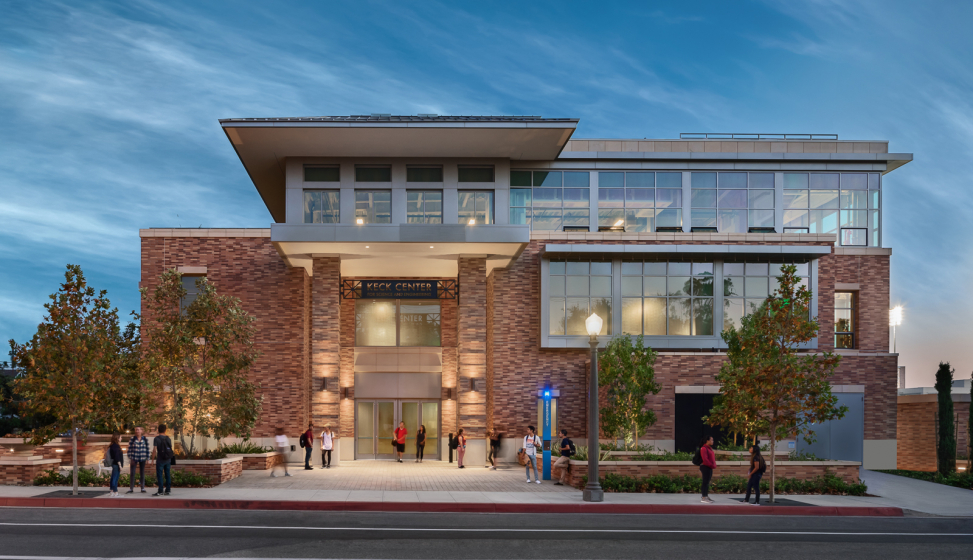
The Keck Center for Science and Engineering occupies a significant site on the Chapman campus, located at the north-east corner, adjacent to the Chapman football field (to the west) and Argyros Forum (to the south).  The new building adds 140,000 SF of educational space and two levels of below grade parking. 

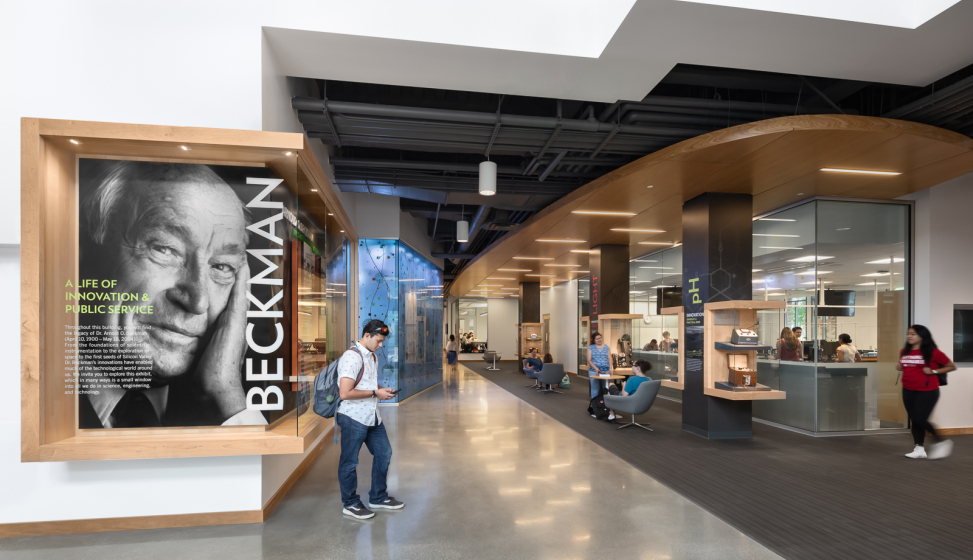
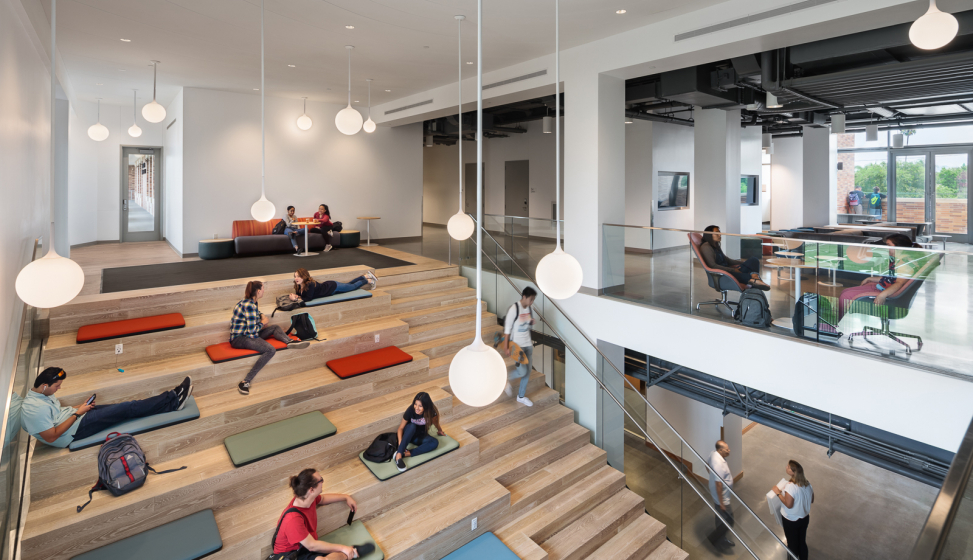
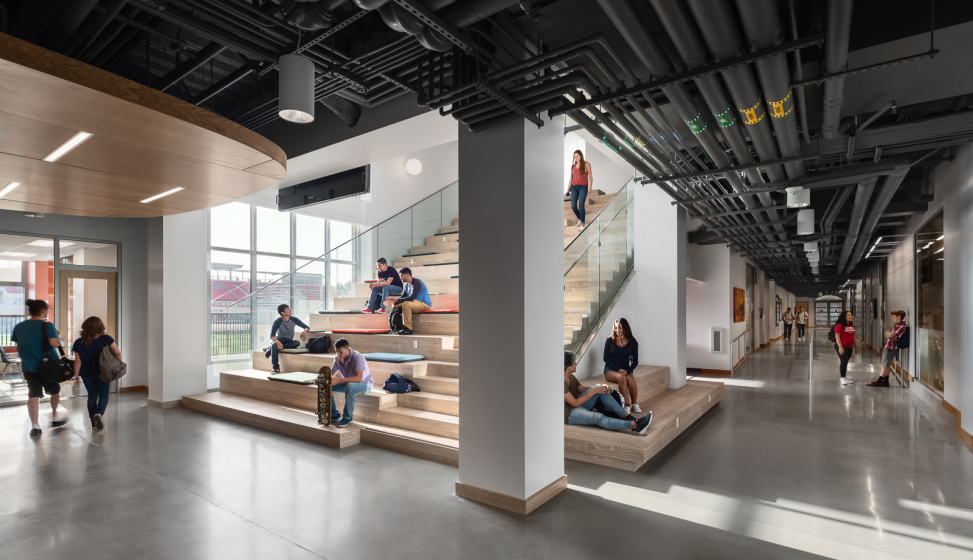
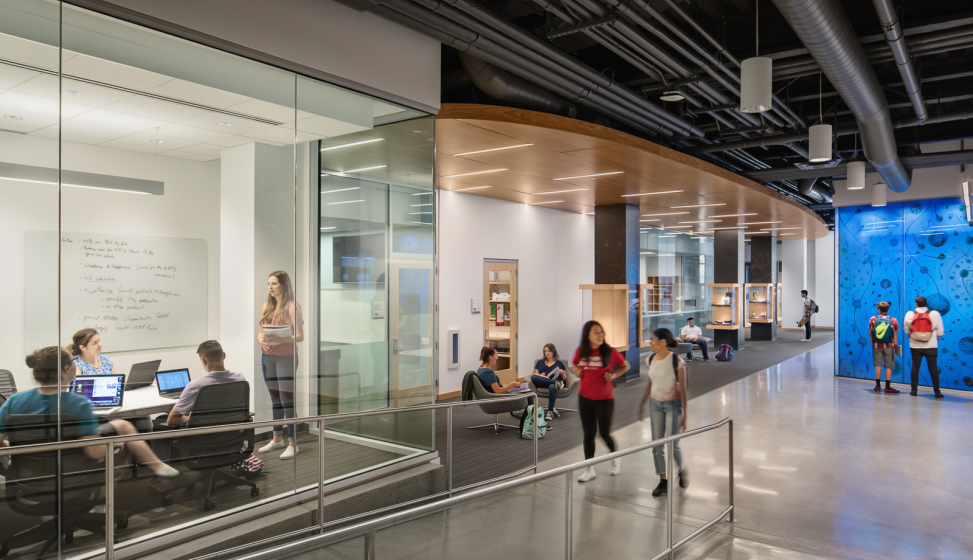
The Center presents a permeable, welcoming face to the campus and surrounding community. An entry plaza facing Argyros Forum addresses the anticipated pedestrian traffic flow from campus. One enters from the north into a generously day lit two-story space. A wide corridor is lined with floor to ceiling glass and integrated display cabinets, putting science on display. Throughout the length of the building, “events” are introduced as collaborative spaces, and to allow views out to the east and west. The heart of the building is at the midpoint and consists of a variety of gathering spaces.  A stepped amphitheater allows for casual meeting and working, and also provides vertical connectivity through the building.  A connecting stair rises from the second to third floor, continuing the connectivity to the upper floor. Each floor has a collection of meeting rooms and lounges complete with coffee making facilities and student gathering spaces. 

At the second floor, an outdoor terrace adjacent to the amphitheater allows for the collaborative space to spill outdoors.  The terrace also provides a physical break in the rather long eastern elevation. At the third floor, due to the prescribed setback, there exists an opportunity to have terraces and roof gardens along the Eastern face of the building.  The faculty lounge and seminar room are also adjacent to outdoor terraces. 

An open arcade occupies the first floor eastern face of the building and connects to the existing sidewalk at a number of locations. Outdoor rooms have been integrated in the garden space next to the arcade to encourage student and faculty gatherings.  The entry facing Center Street at the center of the building will provide access to the visitors’ stadium seating through a grand arched opening. Visitors will access the bleachers serving the football field through an arched two-story space.

Pages

Subscribe to RSS - Higher Education